


Emotions help us understand what we should be paying attention to
Una Meistere
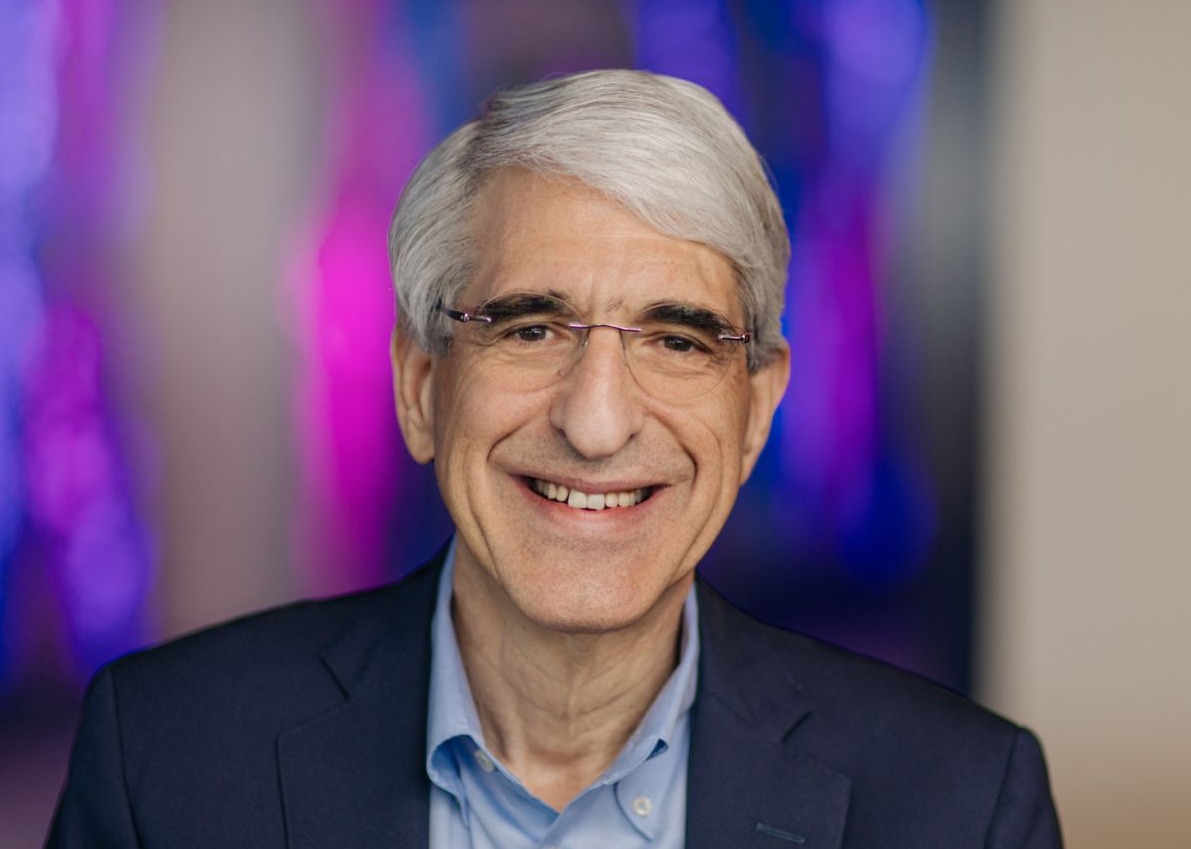
An interview with Peter Salovey, former President of Yale University and Sterling Professor of Psychology
There are few people in the world who know as much about emotions – and particularly about emotion regulation, as Peter Salovey. One of his longtime colleagues once mentioned to me that if there is anyone capable of understanding how emotions shape human behavior, relationships, and decision-making, it is probably him. That observation stayed with me during our conversation.
Together with John D. Mayer, Peter Salovey introduced the concept of emotional intelligence into psychology in 1990, arguing that emotions are not simply irrational forces opposed to thinking, but a form of information that human beings can learn to recognize, understand, and use. Decades later, after Daniel Goleman’s bestselling book Emotional Intelligence carried the term far beyond academic circles, the concept became part of global culture – entering schools, workplaces, therapy rooms, and everyday language.
Over the course of his career, Salovey has authored and edited numerous influential books and scholarly volumes on emotional intelligence, emotion regulation, health psychology, and human social behavior, helping shape both academic research and public discussion around emotions for more than three decades.
But long before emotional intelligence became a widely used expression, Salovey’s work was already attempting to answer deeper questions: Why do humans have emotions at all? What functions do envy, shame, empathy, or jealousy serve? Can emotions help us think more intelligently rather than less? And what happens to emotional life in a world increasingly shaped by technology, algorithms, and mediated perception?
Peter Salovey served as President of Yale University from 2013 to 2024. Throughout his academic career, his work has focused on emotion regulation, health psychology, nonverbal communication, and the ways emotions influence human judgment and social life.
This conversation is part of the dialogue series accompanying the exhibition How Are You Today? Emotional Intelligence at Riga Contemporary Art Space (July 2 – September 13, 2026) – a project exploring emotions not only as psychological states, but also as cultural, social, aesthetic, and existential phenomena. Our conversation moved between science and philosophy, between AI and silence, between envy and empathy, and between the question of why we have emotions and the perhaps even more difficult question: who are we, really?
You have introduced the concept of emotional intelligence at a very different moment in time. If you were beginning your work today within a world shaped by AI and mediated perception, would you still call it “emotional intelligence” or would you name it differently?Because the environment has changed so radically – but I wonder whether our core emotions, or the way we deal with them, have actually changed as well.
Yeah, so I guess I start fundamentally with the idea that we evolved an emotional system over many, many generations of humans, and that it really is part of our biological makeup. That’s the starting point.
I like the term emotional intelligence, and I still use it because I think we often overlook our ability to harness the information provided by our emotions and then use it in our daily lives – whether to make good decisions, solve problems, or establish and maintain relationships, and the like.
You know, the phrase itself – when Jack Mayer and I wrote our first paper in 1990 – was designed to be a little provocative. What does emotion have to do with intelligence? Or, for that matter, what does intelligence have to do with emotion? And I still think that even though it’s now a concept known worldwide, it remains a bit controversial and provocative.
One thing I would have done a little differently is that, in our initial writing and thinking about it – and in our approaches to measuring it and researching it – we thought of emotional intelligence as kind of a universal phenomenon. We were looking for skills that everybody would possess, more or less, such as perceiving emotion in oneself and others, understanding emotions and the language of emotion, understanding how emotions progress over time, regulating emotions in oneself and in other people, and then using emotions in daily life to think more adaptively and to build better social relationships – with family, in the workplace, with friends, and the like.
We didn’t put much emphasis on cultural differences in emotion, and particularly on the skill of appreciating, understanding, and using those cultural differences in emotion. And I think that as the world has become more global, the issue of cultural differences has become even more important - even if some of those differences may be lessened by globalization.
I think globalization puts us in contact with one another in new ways, and the internet certainly connects us with so much of the world that, if we don’t appreciate the subtle differences in how emotions are experienced and expressed across cultures, we’re missing something important about being human.
You asked about AI, and Jack Mayer, in particular, has been doing some benchmarking and testing. Most of these large language models - and the chatbots associated with them – actually do pretty well on our tests of emotional intelligence. They’re not geniuses, but they’re typically above average. I think the aspects of emotional intelligence that are based on knowledge about emotions are areas in which AI systems can become quite expert. The aspects that are more fluid and context – dependent are a bit harder for AI to process, but it will probably get there.
And I do think, by the way, that one of the best ways adults can develop their emotional intelligence is through the arts – whether it’s reading great literature and getting into the motives of characters (and theater can do that as well), or listening to music and getting in touch with the emotions the music stirs within you. It gives you a chance, in a way, to practice experiencing certain emotions in a safe environment.
Emotional awareness can also be developed through the visual arts, – through your own work in the visual arts, or through observing the work of others. What does it stir in you? How does it make you feel? What contradictions or conflicts does it contain? It’s simply a wonderful stimulus for talking about one’s feelings and, as a result, learning more about them.
Emotional awareness can also be developed through the visual arts, – through your own work in the visual arts, or through observing the work of others.
When working on this exhibition in Riga, at the center of it are the six core emotions – also the ones Paul Ekman speaks about. And while we were discussing and selecting the artworks that could, in a way, perhaps trigger – though that’s not quite the right word – stimulate or activate particular emotions in us, I started to wonder: does emotional intelligence exist only on the individual level, or can we also speak about some form of collective emotional intelligence?
Yeah, I do think that cultures and countries place greater or lesser emphasis on using emotions as a source of information – on harnessing the data contained in our emotions. More stoic cultures tend to discourage it, while more expressive and effusive cultures tend to encourage it. And of course, different cultures also encourage emotional expression differently in men and women, and in boys and girls as they grow up. So you’re definitely going to see those differences – no doubt about it.
If emotional intelligence is one among many forms of human intelligence, what kind of intelligence is it actually? And how does it relate to other forms of intelligence?
Jack Mayer is working on this. He thinks a useful framework is something he calls personal intelligences, and that includes emotional intelligence. It might also include social intelligence, which is your ability to understand relationships among people, as well as a kind of personality intelligence – understanding differences in people’s dispositions, including your own, and understanding your own temperament and emotional states.
So he thinks there’s a broader cluster of related capacities there. And that’s not extremely different from what Howard Gardner proposed in his theory of multiple intelligences, which included intrapersonal and interpersonal intelligences. Those weren’t the intelligences Gardner particularly emphasized, but they were part of his model, which actually dates back to the 1980s – before our emotional intelligence paper.
But also, if you look back at Darwin’s time, is it possible to hypothesize that he had already begun thinking, at least indirectly, about something resembling emotional intelligence?
Yeah, you know, every talk I give on emotional intelligence – whether to a general audience or to students – I start with Darwin, because of the idea that we have evolved certain emotions, and particularly the expressions associated with those emotions, that communicate with our fellow humans, but also with predators and others, conveying our intentions.
Those expressions help us survive and help our species survive collectively. Darwin didn’t use the phrase emotional intelligence, but it’s a kind of evolved emotional intelligence. So yes, I often point to Darwin as the origin of at least the idea that emotions are functional – that our emotions, and the expressions associated with them, provide important communicative information with survival value, both for us as individuals and for the species as a whole.
Yeah, I do think that’s where it begins. That’s where systematic thinking about it begins – or at least one of the places where it begins.
But it took quite a long time for it to reach the point where it became an actual concept.
I mean, I think part of the problem – and it was actually the problem we were trying to address when we wrote our 1990 paper – was that the field dealing with these various emotional competencies was quite scattered. People who studied language and people’s facility with the language of emotions didn’t really interact with the people who studied emotion regulation and people’s ability to regulate emotion. And they, in turn, didn’t interact much with the people who studied emotion perception and identification. It was all really quite fragmented.
So I don’t think we came up with something entirely new as much as we created an organizing framework that brought together a variety of competencies related to emotions – competencies that had previously been studied in very different ways, measured in very different ways, and examined by parts of the field that didn’t always interact very much with one another. I think it’s more of a unifying framework.
You mentioned the system, and I’m wondering: what role does language play in emotional intelligence? Do we become more emotionally intelligent by naming emotions, or can language sometimes distance us from the raw experience of our feelings?
Yeah, certainly being able to name emotions is often the starting point for developing emotional intelligence, particularly in children. Curricula designed to develop emotional intelligence in kids – such as the RULER curriculum, developed by Marc Brackett, who was originally a graduate student of Jack Mayer’s and then a postdoc in my lab, and who is now the director of the Yale Center for Emotional Intelligence – really begin with children learning how to label their feelings.
They use a tool called the Mood Meter, which is based on models of emotion developed by researchers like Plutchik and Russell. And being able to name an emotion really does help you talk about it. I don’t know that it changes the experience itself, but it gives you a starting point – a language through which you can share your emotions, your meta-emotions, meaning your feelings about your feelings, and your thoughts about your emotions.
Being able to name emotions is often the starting point for developing emotional intelligence, particularly in children.
To what extent can emotional intelligence be developed in individuals with narcissistic or antisocial traits?
I think we’ve done a little bit of work – or rather, I was involved in a collaboration with someone studying sociopaths, people with antisocial personality traits - and they do show deficits in emotional intelligence. They show deficits in empathy and related capacities.
Can they still learn emotional intelligence? I don’t know. But there are definitely deficits there.
More generally, without going to the extremes of psychopathology, I do think emotional intelligence and moral behavior are really orthogonal constructs. You can be emotionally intelligent and use those skills for harmful purposes. Or you can be emotionally intelligent and use them to improve the world - both in your relationships with individuals and in your relationship to society more broadly.
I do think emotional intelligence and moral behavior are really orthogonal constructs.
So, emotional intelligence has both its good and its darker sides.
Well, I think good and evil are actually orthogonal to emotional intelligence. And if you think about it that way, it produces four quadrants, right? You can have high emotional intelligence and use it for good. You can have high emotional intelligence and use it for harmful purposes. You can have low emotional intelligence and still be a good person. Or you can have low emotional intelligence and be a harmful person. I think all four of those combinations are possible.
In a time marked by instability – global conflicts, personal crisis, rising mental health problems – what role do you think emotional intelligence can realistically play? Is it a resource, a buffer, or are we expecting too much from it?
Yeah, I think we are seeing much higher levels of mood disorders – in particular depression and anxiety – especially among adolescents and young adults. And I believe we’re seeing this globally; we’re certainly seeing it in the United States.
I think emotional intelligence, while simply having those skills doesn’t necessarily make you happier or calmer, does provide a language and a set of regulatory skills that, in combination with other forms of treatment – whether pharmacological treatments or therapeutic approaches like cognitive behavioral therapy and the like – can be very helpful. I think emotional intelligence adds to the arsenal of tools we have for learning how to feel better.
I think emotional intelligence adds to the arsenal of tools we have for learning how to feel better.
We speak constantly about empathy, yet the world around us often suggests we are not very successful at practicing it. Why do you think there is such a gap between understanding empathy and actually living it?
Yeah, you know, I do believe that empathy is important. If you can’t empathize – if you can’t experience or understand the emotions another person is experiencing, it’s hard to act kindly or emotionally intelligently toward them.
Now, not everybody agrees with that. A former colleague and good friend of mine, the developmental psychologist Paul Bloom, actually believes that empathy isn’t necessarily the key to moral behavior – that morality is still, to a large extent, a reasoning process.
There is growing interest in connection between emotional intelligence and physical health. Do you think this relationship is direct? Ideas about the relationship between emotions and the body also appear in many Eastern philosophical and medical traditions.
I think the relationship between emotional intelligence and physical health is still not entirely clear – the data are still out, but it is entirely possible that being emotionally intelligent helps people become more realistic about future states, both in themselves and in others, including their future health. It may help people eat more healthily, exercise regularly, and engage in healthier lifestyles, because doing so requires you to anticipate your future feelings – feelings of regret, joy, satisfaction, and so on.
So I do think emotional intelligence plays a role there. We’ve done some work showing that when people develop the skills involved in emotional intelligence, they also become better at forecasting their future emotions.
But you think there still isn’t enough scientific evidence to say that there is a direct connection between emotions and physical health?
Yeah, I don’t… I mean, there’s probably research out there that I’m not familiar with, but I’m not sure I’ve yet seen truly convincing evidence establishing strong connections between levels of emotional intelligence and concrete health outcomes – things like heart rate, blood pressure, physical fitness, and so forth.
I think more work needs to be done to really establish those connections and, for that matter, questions of causality.
What happens to a concept when it moves from academic research into popular culture? That is exactly what happened with emotional intelligence after Daniel Goleman published his bestselling book Emotional Intelligence. Do you think something essential about emotional intelligence was clarified – or perhaps simplified - in that transition?
Yeah, a little bit of both. I mean, I love the idea that findings from research – and a concept that I was involved in developing, became much more widely known than they would have been if we had only been writing for other academics. So I think it’s important and worthwhile to communicate these ideas to the general public.
The challenge that emerged when the concept became popularized was that the term emotional intelligence began to be used for almost anything positive in the human psyche. Happiness became emotional intelligence. Personality traits like extroversion, conscientiousness, or openness to experience became emotional intelligence.
And I think it’s very important, even in popular discussions, to keep the term emotional intelligence focused on skills and abilities related to processing emotions and emotional information.
So while I love the fact that it became popular and that many people know about it, I would like the popular use of the term to be more systematic and more focused on skills and abilities – because that’s really what it is.
I think it’s very important, even in popular discussions, to keep the term emotional intelligence focused on skills and abilities related to processing emotions and emotional information.
You and your colleagues developed methods for measuring emotional intelligence, including scoring systems and assessment models. If I understand correctly, the field has evolved from the original model toward newer versions and approaches. How has your understanding of measuring emotional intelligence changed over time, and what distinguishes the newer models from the earlier ones?
We have a measure of emotional intelligence called the Mayer-Salovey-Caruso Emotional Intelligence Test, or MSCEIT. The first version came out about 20 years ago, and last year we updated it to the MSCEIT 2.
The revised version is structured very much like the original, but we refined many of the items. One of our main goals was to shorten the test. The original version took about 40 minutes to complete, and we wanted to reduce that to something closer to 20 minutes.
The test isn’t perfect, but it remains the only comprehensive assessment that measures all four emotional-intelligence skills as actual abilities, rather than relying on self-report – in other words, not simply asking people about their abilities, but directly measuring them. It’s published and distributed by a testing company in Toronto called Multi-Health Systems.
Is it possible for someone to be intellectually brilliant and, at the same time, emotionally totally unintelligent?
Yes. I mean, I don’t know about being totally emotionally unintelligent, but it is certainly possible to have a high IQ and a low EQ.
We see it all the time in universities – brilliant people who have never really developed their social skills, their emotional skills, their ability to build relationships with others, or even their ability to understand their own feelings. I think it’s sad when I see that, but I think it’s entirely possible.
But again, the optimistic part is that these are skills that can still be developed in adulthood – and, as I mentioned earlier, the arts can play an important role in that process.
But through your work with schools and teachers – including the RULER program and other initiatives - do you genuinely see measurable results?
Yeah, the RULER program has been tested in randomized controlled trials involving many students, comparing those enrolled in the program with students taking other kinds of character-development or character-education courses.
And students who participate in the RULER program – which exists in versions from kindergarten through 12th grade – are more likely to perform better academically, behave better in school, and develop stronger social relationships. Their families also report improvements in their behavior at home. So the data supporting these kinds of programs are actually becoming quite strong.
We are living in an age of social networks and fragmentation. How do you think that shapes our emotional intelligence – are they strengthening our ability to understand emotions, or even more fragmenting it?
I think there’s no doubt that it shapes us. Yes. And I think someone will eventually do the study – maybe my colleague here at Yale, Nicholas Christakis – showing that you’re more likely to have higher emotional intelligence if your friends, and even the friends of your friends, have higher emotional intelligence.
I think we learn it, at least in part, through the modeling of others. If you have many emotionally intelligent friends, they’re more likely to want to process their thoughts and feelings with you as part of their normal style and habits - and that, in turn, helps you develop those skills as well.
In a way, you learn it almost unconsciously.
I think both, yeah. I would say through social learning – which you’re not always consciously aware of, and through modeling.
In your early work you explored envy not just as a negative emotion, but as something structured and meaningful. Do you think we misunderstand envy because we moralize it too quickly? What kind of knowledge might envy carry that we are culturally trained to ignore?
Yeah, yeah. The first emotions I ever studied were envy and jealousy. It actually started when I was an undergraduate at Stanford. We did a study showing that when people were happy because something good had happened to them, they were more willing to help another person. But when they were happy because something good had happened to someone they cared about, they were actually less likely to help someone else.
So I started wondering what was going on there. I wondered whether there was a kind of happiness for others that was tinged with envy – a feeling that somehow left you without the psychological resources to then offer altruistic help to another person.
That got me interested in envy and jealousy more broadly – how they are related, how they make us feel, and eventually why we have these emotions at all. Why are envy and jealousy found across so many cultures if they don’t serve some purpose? What would a functional theory of envy and jealousy look like?
I came to feel very strongly that envy can actually help us understand what is truly important to our sense of self – what really matters to us and what doesn’t. And if those crucial aspects of ourselves are threatened, feeling envy and being motivated to protect or regain them is not necessarily a bad thing.
Similarly with jealousy: jealousy is triggered when we fear losing a relationship that matters deeply to us. Obviously, it can become pathological or overwhelming, but in reasonable doses it helps us recognize whether a relationship is truly important to us or not. And what is really wrong with feeling some fear, some anger, and some sadness when there is a risk of losing a meaningful relationship?
I came to feel very strongly that envy can actually help us understand what is truly important to our sense of self – what really matters to us and what doesn’t.
Yeah, but it’s interesting: why did evolution give us, among the six basic emotions, only one that is clearly optimistic or positive, while the others seem to carry a more negative connotation? Even surprise can go either way.
Yeah, the very idea that there are basic emotions at all is controversial. And the idea that there are only six basic emotions is controversial as well. I think what Paul Ekman was focusing on were emotions that he believed were experienced universally, that had analogues in the animal world, and that carried clear survival value. And, you know, things that threaten our survival tend to loom larger than things that simply reinforce it. So the emotions attached to threats are often more numerous and more intense.
There’s a hypothesis suggesting that, from an evolutionary point of view, humans are not necessarily programmed to be happy.
I don’t know – I don’t have a definitive feeling about that. But I do think that, from an evolutionary point of view, we are programmed primarily to survive and to procreate.
And I think the activities that help us survive – things like eating, drinking, reproducing – are generally reinforced more by positive feelings than by negative ones. Eating and staying hydrated, for example, are facilitated by pleasurable feelings. So I would probably lean toward the view that our natural state is somewhat more oriented toward the positive than the negative.
I would probably lean toward the view that our natural state is somewhat more oriented toward the positive than the negative.
We often associate emotional intelligence with expression and articulation. But can silence be a form of emotional intelligence? And how can we distinguish between silence as awareness and silence as avoidance?
Sure. And I think people who meditate in silence, you know, Richard Davidson has studied monks who spend long periods in silence and meditation – show measurable differences in their brains. Their way of handling emotions and managing feelings is quite different.
So yes, I do think there are ways of developing these skills that don’t depend solely on interaction with other people or external stimuli. Sometimes just being in your own head can help.
We often hear ‘fake it till you make it.’ When it comes to emotions – something as simple as a smile – does acting a feeling help us actually experience it, or does it create distance from what we really feel?
Yeah, there are feedback loops. Robert Zajonc and others have done research on them – showing, for example, that adopting a facial expression, particularly when you’re not fully aware you’re doing it, can influence how you feel. Smiling can actually make you feel happier.
And, you know, ‘laugh and the whole world laughs with you.’ There really is a kind of feedback system that influences our feelings.
Sometimes just being in your own head can help.
But does that actually help us deal with our emotions, or can it sometimes create a distance from what we truly feel?
Yeah, it’s hard to know. I don’t think anybody’s depression was ever cured simply by walking around smiling all day. But I do think there are many activities where, if you simply engage in them, your mental state may gradually begin to change over time.
I think that’s true for emotions. I think it’s true for people involved in religious practice. I think it’s true for developing healthy habits like exercising, and so on. Sometimes you just try something and see whether, over time, you begin to develop a desire for it.
I think we are wired to get feedback from our own behavior and to develop preferences based on our own behavior.
I think we are wired to get feedback from our own behavior and to develop preferences based on our own behavior.
Here in Latvia – and I think in many other countries as well, we are seeing growing concern about treatment-resistant depression and a very serious rise in suicide, including among young people. At the same time, we speak more and more about emotional regulation, emotional awareness, and the importance of recognizing our emotions. But the reality seems much more difficult.
What are we doing wrong? Or perhaps more importantly, what are we still missing? What kinds of tools, approaches, or forms of support do we need in order to respond more effectively – especially when it comes to depression, where it sometimes feels that we still do not have enough ways to truly help people?
Yeah, I’m not an expert on why we have treatment-resistant depression, but I do think that psychology – and, for that matter, pharmacology – constantly needs to search for new tools, new approaches, and new strategies, because there will always be people for whom even well-established and effective treatments simply do not work.
And over the past decade or so, we have actually seen a return to some treatments that were once thought to be ineffective or too controversial for depression – treatments like what used to be called ECT, electroconvulsive therapy, although it is now done in a much gentler and more carefully controlled way. And there is evidence that, for some people, it really can help.
What do you think we still do not fully understand about emotional intelligence?
I think we still don’t completely understand how parents transmit these skills to children. And when it comes to learning emotional intelligence as an adult, as I said earlier, I think the arts matter a great deal – but there must also be other ways adults can develop these skills. I also don’t think anyone has really studied psychotherapy as a possible tool for learning the skills of emotional intelligence.
For our own research program in particular, we still feel that we are measuring emotional intelligence a bit too much through crystallized knowledge – things people know. I would like to see it measured in a more fluid way: how people actually apply these skills in realistic situations. I’d also like to do more work involving AI and robotics as ways of assessing emotional intelligence.
So there are still many directions for future research. I’m much closer to the end of my career than the beginning, so I probably won’t be the one doing all of these things. But I hope we can inspire others to continue the work.
At what stage do children begin to develop emotional intelligence? Is it primarily something we learn through interaction with others, or are certain emotional capacities already present in us from the very beginning, perhaps even in the womb?
I think, you know, in the mother’s womb, certain temperamental things are already quite genetic – like the tendency to seek out others versus being more introverted, or the tendency to tolerate novelty versus being more fearful of novelty. Those temperamental differences are pretty much there – at least somewhat there, from birth.
But I think learning these skills begins as soon as you start interacting with the world. An infant is already learning frustration tolerance, already regulating emotions when a mother, father, or caretaker leaves. Those skills are being learned very early.
An infant is already learning frustration tolerance, already regulating emotions when a mother, father, or caretaker leaves. Those skills are being learned very early.
What was the moment in your personal life when you realized that you wanted to dedicate your career to the study of emotions? I imagine there must have been some deeper curiosity or personal experience behind it.
Yeah, I think it happened when I was an undergraduate working in the lab of David Rosenhan. We were inducing emotions and moods in people and studying the consequences of those induced moods. I remember talking with David during a meeting with my advisor while we were discussing one of our studies, and he suddenly asked me: ‘Why do you think we have an emotional system?’
And it was as if I had never really thought about that before. I had simply assumed we had emotions and was interested in the consequences of having them. But that question set me on a kind of lifelong journey to understand why we have emotions at all.
David Rosenhan believed, as many people do, and as I do as well – that we have an emotional system because it helps direct our attention toward what matters. To him, that was the emotional system’s most important function. And that got me very interested in questions like: why do we have unpleasant emotions, and what positive functions might those unpleasant emotions serve? We talked earlier about envy and jealousy in that context.
So yes, I think it really was that moment. I remember it as if it were yesterday – even though it was probably 45 or maybe nearly 50 years ago – when he asked me, ‘Why do you think we even have emotions?’ I can still remember that conversation vividly.
And did you eventually find an answer?
I think there are multiple answers, but I still think his original intuition was largely correct – that emotions help us understand what we should be paying attention to, and then help us behave and think in adaptive ways.
Yeah, I think that’s fundamentally why we have emotions. That’s the emotional-intelligence view of emotions.
Emotions help us understand what we should be paying attention to, and then help us behave and think in adaptive ways.
The question ‘Why do we have emotions?’ may actually be easier to answer than the question ‘Who am I?’ Maybe that is the question we still haven’t truly answered.
Exactly. We still can’t answer it.
But what does it actually mean to be emotionally intelligent today?
I still think it means being aware of your own feelings and the feelings of others, and trying to act in ways that are helpful to yourself but also socially constructive on the basis of those emotions.
And sure, there are going to be many other forces that affect our survival more directly in the world we live in today – whether it’s climate change, war, or other large-scale crises –, but that doesn’t make emotional intelligence any less important.
But is there any emotion you still struggle with personally? I think each of us has certain emotions that remain difficult to deal with sometimes.
Yeah, personally, I’m still somewhat prone to embarrassment and shame – to self-conscious emotions. If I feel I haven’t taught as well as I could have that day, or haven’t given a good talk, or if I feel I haven’t been as kind to someone as I should have been, I can become quite self-conscious and embarrassed about it. But that’s not necessarily a bad thing. Those emotions also give us something to reflect on and can motivate us to do better.
Still, I’d say those self-conscious emotions are probably the ones I have the hardest time dealing with.
Is there a meaningful relationship between self-esteem and emotional intelligence, or should they be understood as separate constructs?
I think emotional intelligence can certainly be a source of self-esteem. You know, feeling that you are particularly skilled at something can make you feel good about yourself.
But I think self-esteem is largely something different, something separate. You can be a very emotionally intelligent person and still not like yourself very much, still not regard yourself positively.
Are you still actively working on developing the field of emotional intelligence further? What kinds of projects or questions are you focused on now?
Yeah, with students and other collaborators, yes. I do want to develop a way of assessing emotional intelligence in a more real-world context – not relying so much on paper-and-pencil tests or computer interfaces, but instead assessing it through interaction, perhaps with some kind of robot.”
So the robot would function as a tool that could teach people more, or is the main idea assessment?
Both teaching and assessment. We’re already seeing some of this. My colleague Brian Scassellati has developed robots that interact with children with autism, and these children sometimes learn skills through interacting with the robots that they do not easily learn in interactions with humans.
Their parents watch these interactions and are astonished. Sometimes they even cry, because they see their children interacting more successfully with the robot than they have ever seen them interact with another person. They hadn’t really believed their children possessed those skills, but they do.
But why do you think that is? Because many autistic children, for example, often avoid direct eye contact with other people.
I think that’s probably right. Many autistic children are often naturally drawn to mechanical objects and systems, and may find it easier to focus on those than on distinctly human cues such as eye contact or facial expressions.
I don’t want to overgeneralize, but it is a fairly common observation in autism that these areas – reading faces, maintaining eye contact, interpreting subtle social signals – can be areas of difficulty.
But that suggests that these kinds of robots could genuinely help autistic children develop social skills in the future and navigate social interaction more easily.
Absolutely. Parents often wish they could take the robot home with them – and someday, that may actually become possible.
Thank you!
