


Ethnobotany and Alzheimer’s disease
Una Meistere
A conversation with American ethnobotanist Dr. Paul Alan Cox
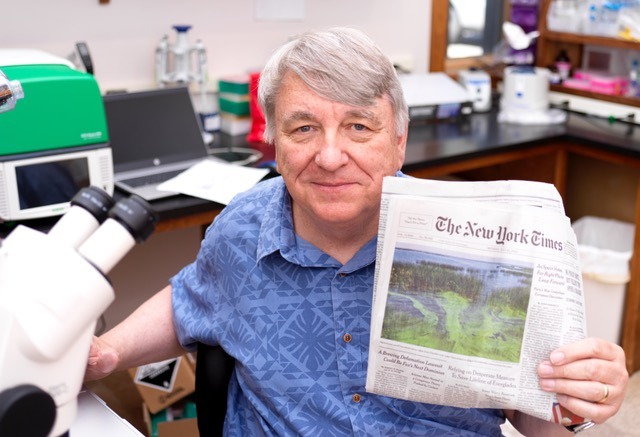
Dr. Paul Alan Cox is one of the world’s leading ethnobotanists, internationally recognized for his groundbreaking work at the intersection of plant science, medicine, and conservation. Named one of TIME magazine’s Heroes of Medicine for his search for new drugs in remote island communities, Cox has spent decades demonstrating how Indigenous knowledge – when approached ethically and respectfully – can lead to major advances in modern medicine. He is also the recipient of the Goldman Environmental Prize for founding Seacology, a global island conservation organization headquartered in Berkeley that has helped protect vast areas of rainforest and coral reef worldwide.
Cox received his Ph.D. from Harvard University after earlier studies at Brigham Young University and the University of Wales, where he was a Fulbright Fellow. He went on to become a Miller Fellow at the University of California, Berkeley, was named a Presidential Young Investigator, served as Professor and Dean at BYU, and was later appointed King Carl XVI Gustaf Professor in Sweden. Over the course of his career, he has published more than 250 scientific papers and four books, including Plants, People, and Culture: The Science of Ethnobotany, co-authored with Michael J. Balick.
In recent years, Cox’s research at the Institute for Ethnomedicine in Jackson Hole, Wyoming, has focused on neurodegenerative diseases such as Alzheimer’s disease and ALS. His work was recently profiled by Dr. Sanjay Gupta in a CNN documentary highlighting the Brain Chemistry Labs’ search for new treatments. Central to this research is Cox’s landmark work on the Pacific island of Guam, where studies of two villages with the world’s highest recorded incidence of an Alzheimer’s-like illness led to the discovery that cyanobacteria produce a neurotoxin capable of contaminating traditional food supplies. Chronic exposure to this toxin was shown to reproduce Alzheimer’s neuropathology in laboratory animals, offering crucial insights into the role of environmental triggers and protein misfolding in neurodegenerative disease.
To understand the other side of this equation – resilience rather than disease – Cox also turned his attention to Okinawa, Japan, and the village of Ogimi, one of the world’s well-known Blue Zones, where people live exceptionally long lives with remarkably low rates of Alzheimer’s disease and other neurodegenerative conditions. Through ethnobotanical fieldwork, dietary analysis, and close engagement with the community, Cox and his colleagues identified unusually high dietary intake of L-serine, a naturally occurring amino acid found in seaweed and local plants. This discovery helped shape a new hypothesis: that certain naturally occurring compounds may protect the brain by preventing protein misfolding.
Together, insights from Guam and Ogimi have led to advanced clinical trials in Houston investigating L-serine as a potential treatment for Mild Cognitive Impairment (MCI) – a precursor to Alzheimer’s disease – as well as ALS. If successful, these trials may open new pathways for prevention and treatment, offering hope for millions of people worldwide.
In this conversation, Cox reflects on decades of fieldwork, from Guam to Okinawa, and how these experiences shaped his understanding of neurodegenerative disease as something influenced by environment, culture, history, and everyday life – opening space to think differently about prevention, responsibility, and where future therapies might emerge.
So actually, the inspiration for this interview is the new course at McKenna’s Academy, which is devoted to ethnobotany, and your lecture that is part of it, titled “Ethnobotany and Neurodegenerative Diseases.” Afterwards, I also read your book Plants, People, and Culture: The Science of Ethnobotany, which you co-wrote with Michael J. Balick.
What also made me think deeply about how we humans – and our actions – can create the conditions for disease was the case you studied on the island of Guam. During World War II, Guam briefly became a war zone. Then, some years later, the indigenous Chamorro people developed a strange neurological disease there – a combination, in a way, of Alzheimer’s and Parkinson’s disease.
Now we have war very close to our border, and it has been going on for quite a long time. At the same time, wars seem to be erupting in other parts of the world as well. Guam is a powerful example of how we can look at the long-term consequences of such events. But it was also the path that led us closer to an understanding of Alzheimer’s disease, which did not originally appear in Guam.
So maybe we can begin our conversation with your story about Guam, bringing together all of these aspects I’ve mentioned.
Sure, I would be happy to discuss that. In the late 1990s, I had been working very carefully with Dr. Gordon M. Cragg, Dr. John A. Beutler, and Dr. John H. Cardellina II at the U.S. National Cancer Institute, looking for new treatments for HIV/AIDS.
Based on our analysis of a Samoan herbal remedy – and with the permission of the healer, the village chiefs, and the Prime Minister of Samoa – we moved forward with the discovery of anti-viral activity in a plant compound called prostratin. Its technical name is 12-deoxyphorbol 13-acetate.
This came from a little tree whose bark the natives had been scraping and boiling. They would put it into very hot water, strain it out like a tea bag, and have the patient drink that water infusion.
This was a very novel mechanism for treating HIV/AIDS. Once that work was launched – albeit slowly – through the pharmaceutical pipeline, I became very interested in Guam. During field work in Samoa I read an article in the October 1990 New Yorker magazine by Terence Monmaney, called “This Obscure Malady.” It described a strange neurological disease originally documented in Guam by a U.S. Army physician after World War II.
While I was sitting on the beach in Samoa one evening, thinking about the article, a large flight of flying foxes passed overhead. Suddenly it occurred to me that the Chamorro people’s tradition of eating flying foxes might have something to do with the disease - especially if those animals were feeding on cycad seeds which contain a variety of toxins.
At the time, I was looking for a new disease to study I had become very emotionally attached to the HIV/AIDS community. At that time, in the late 1980s and early 1990s, AIDS was a deeply stigmatized disease, and many aspects of it were socially disruptive. People were being rejected by their families and kicked out of their jobs. It was really terrible in the United States. Perhaps it wasn’t as severe in Europe, but in the U.S., it was very rough on sick people that neededcompassion, not rejection.
Suddenly it occurred to me that the Chamorro people’s tradition of eating flying foxes might have something to do with the disease - especially if those animals were feeding on cycad seeds which contain a variety of toxins.
I had began looking for a disease to study that hadn’t seen significant drug development, but that also had a strong societal dimension – one that affected whole families and communities. And that’s when I decided to focus on this obscure malady in Guam.
So I assembled a team. Dr. Sandra Banack had been a graduate student of mine and was then a professor in California. Dr. Susan J. Murch was an extremely gifted amino acid chemist (I had a hunch that it may involved amino acid dysfunction). Dr. John C. Steele was a local neurologist in Guam who had first described PSP – supranuclear palsy. Dr. Patricia Stewart was a a gifted physician who had excelled in field work with us in Samoa. And so we quietly began making expeditions to Guam in the late 1990s and early 2000s. I think we made five or six expeditions.
The disease was very unusual. It was largely confined to two villages, Umatac and Merizo, on the south side of the island of Guam. These villages were fairly remote within Guam, and only within the last decade had a decent road been put in to reach them.
Villagers there were more likely to embrace a traditional Chamorro lifestyle. Since I’m an ethnobotanist and not a clinician, I don’t hang around the clinic with a white coat and a stethoscope. I do my best to learn the people’s language, and go out and visit them in their homes. I think our team visited nearly every family in both villages, and we didn’t find a single family that was not impacted by this puzzling neurological disease.
To give some perspective, at its peak, this disease was killing 25% of the adults in both villages. These adults had different neurological symptoms. Sometimes the disease appeared paralytic, like ALS. Sometimes it appeared to be like parkinsonism. And sometimes – almost always, it seemed – older people who got it developed dementia, an Alzheimer’s-type dementia. Some poor people had multiple indications. It was just a really terrible illness with an immense toll on patients and their families.
We became fascinated by the people’s consumption of these flying foxes, and we observed the flying foxes eating the seeds of the cycad trees. I knew as a botanist that cycad trees have aerial roots that harbor cyanobacteria. We cultured the cyanobacteria from cycads in our laboratory – we were then based in Hawaii – and discovered that they were producing a very unusual neurotoxin called BMAA, beta-methylamino L-alanine. While our bodies build proteins from just 20 amino acids, there are thousands of different amino acids in nature, and BMAA is one that is not normally incorporated into human proteins.
Meanwhile, I had started a conservation foundation called Seacology, and one of the board members was Marsha Williams, who was the spouse of Robin Williams, the actor who portrayed neurologist Oliver Sacks in the film “Awakenings.” She was visiting me in Kauai and started asking about cycad trees in the garden, so I explained a little bit about our work. She said, “I’d like you to talk to Oliver Sacks.” Oliver Sacks was a very prominent neurologist in the USA. He was British, and he’d written a number of important books.
And I said, “Well, you know, a little ethnobotanist like me working on remote islands – we were living on the island of Kauai – I don’t think I should be contacting such world-famous scientists.”
So I decline. However, within about a week or two, I got a letter from Oliver Sacks, and he said, “Marsha Williams told me that you’ve been working on the Guam disease, and I’d love to hear more.”
So I flew out to New York City, went to see him at his office, and I told him about our work. He called in his research assistant Kate Edgar and said, “I think this guy has solved the Guam problem.”I said, “Well, Dr. Sacks, if you agree with that, would you be willing to publish with me?” This became my first article in the journal Neurology, which is one of the leading journals in neurological science.
Meanwhile, our field work progressed, and we obtained increasingly compelling data in support of our hypothesis. We obtained autopsy tissue from some of the villagers who had passed away. And so I said to my team – I had some graduate students and a couple of postdocs – I said, “You know, we could be self-deluded. Here we are in the middle of this beautiful island of Kauai, but we’re pretty isolated. I think we need to have other eyes looking at what we’re doing right now.”
They said, “Well, what are you saying, Cox?”
So I said, “I think we should go to Stockholm.” I am a member – of the Royal Academy of Forestry and Agriculture in Sweden. So I called up the Academy office in Stockholm and said, “Could I come out with some colleagues? We’d like to make some presentations and hold a closed session for neurologists and chemists and physiologists.” They were very kind and agreed to arrange a meeting
So we flew to Stockholm in April of 2003. We presented our data on the Guam disease, and that took about an hour. Then we were waiting for responses and nobody said anything. It was an audience of maybe 50 or 60 people just sitting silently there. This was actually in the Royal Academy of Science headquarters on Lilla Frescativägen, where they decide who gets the Nobel Prize, so it was a pretty prestigious venue.
And finally, I said, “You need to know that I’m very fond of Sweden, and I’ve served as the King’s Professor. But we came here to be criticized. That’s why there are more two hours set aside for this meeting. And if we’re wrong, if we’re missing something important, I’d rather be shot at by my friends than my enemies. So please – you have two hours here to criticize what we’ve have just presented.”
And a very distinguished neurologist at the Karolinska Institute, named Sebastian Conradi, raised his hand. He was an ALS expert. He said, “Paul, you need to know that when your paper came out with Oliver Sacks, it was the topic of cocktail jokes here in Stockholm.” He said, “We called it your batty hypothesis.”
“But now we’ve seen the data,” he said. “We don’t want to criticize you. We want to collaborate. We want to be part of this research.”
So that began our collaboration.
The other interesting thing is that we had submitted a paper to the Proceedings of the National Academy of Sciences, which is a fairly prestigious journal, and boy, they started moving really fast on it. So I had to call up the National Academy and say, “Could you slow down publication?” And the editor said, “Paul, in all the years I’ve been an editor, I’ve never had anybody call me up and ask me to slow down publication.”
I said, “Well, there are some people I want to talk to before this appears in print.” So they agreed.
So we flew back to Guam. We went back because I wanted the indigenous people to hear it from me first, and not from a newspaper report. As an ethnobotanist, I’m responsible not just to my scientific colleagues – I’m also responsible to the indigenous people I work with.
And so we went around, house to house, and told the Chamorro people, “Look, we’ve done a lot of research on this now. We’re grateful for your help, and we believe that it’s this habit of eating flying foxes that has led to this outbreak of disease,” and then we waited for what they would say.
This was a dangerous thing to do, really, as an ethnobotanist, because part of our training is not to interfere with the indigenous culture. And yet, we had discovered something that none of the researchers at NIH had ever figured out: that flying foxes – these are very large bats, Pteropus mariannus being one of the species – were the most culturally salient food item in Chamorro culture.
And they said, “Thank you. We didn’t know what was making us sick. Now we can protect our children.”
So the papers came out. We later discovered that this unusual neurotoxic amino acid produced by the cyanobacteria inserts itself into developing proteins and causes them to misfold. Other researchers found that neuropathological indications of Alzheimer’s and motor neuron disease – what we call ALS in the United States – occurred in the brain tissues of these Chamorro people.
We also found that BMAA was present in the brains of Chamorro people with the disease, but not in the tissues of Canadian participants who were included as randomized controls – except for a few cases. When we broke the blind, we discovered that those Canadian individuals were the ones who had died from Alzheimer’s disease.
So suddenly we realized that you could be exposed to this bacterial toxin almost anywhere – you didn’t have to go to Guam. That sort of green scum you see on polluted lakes? Those are cyanobacteria. And we subsequently discovered that nearly all cyanobacteria can produce this toxin at certain stages of their life cycle.
So based on that, we began working very earnestly to find a way to block the toxin. Research done by our Australian colleagues, Rachael Dunlop and Ken Rogers, let to the identification of L-serine as a possible treatment for the disease. This is now in advanced clinical trials at Houston Methodist. We’re pretty excited about it. We’ve also been working on ways to diagnose the disease very early.
So I’m really pleased that what was a terrible tragedy for the Chamorro people - of course, this terrible epidemic down there - is now yielding some insights that may help people everywhere in the world protect themselves from Alzheimer’s or other neurodegenerative diseases.
I’m really pleased that what was a terrible tragedy for the Chamorro people - of course, this terrible epidemic down there - is now yielding some insights that may help people everywhere in the world protect themselves from Alzheimer’s or other neurodegenerative diseases.
But that means, in a way, the Chamorro people had been eating flying foxes for centuries already.
That’s a really great insight, Una. Yes, there had been a low-level presence of the disease within the Chamorro community, and they had a traditional name for it: lytico-bodig. But in the aftermath of World War II – after Japanese occupation and the subsequent arrival of U.S. Forces – the pattern changed significantly. GIs shared semi-automatic weapons with the Chamorro villagers, which they immediately started using to shoot flying foxes.
Prior to this time, the way to capture a flying fox for the Chamorro was to weave a little basket, attach it to a big pole, sort of like a lacrosse stick, and stand around breadfruit trees at night, trying to capture them as they flew around or off the tree. Suddenly, with semi-automatic weapons, Chamorros could shoot and kill tens, and sometimes hundreds, of animals. We met Chamorros who had been eating five flying foxes a week. We calculated that the dose they received from each flying fox was equivalent to eating hundreds of kilograms of cycad flour made from the gametophyte of the cycad. So they ingested massive doses of BMAA.
And when we plotted the rise in mortality of the disease, we could see that it coincided pretty well with the advent of American weapons being given to the Chamorros and the subsequent decline in flying fox populations. In fact, when we were doing these studies, there was only one remaining population of flying foxes. One species had been driven into extinction, the other was endangered, and the only population that remained was on a United States military air base that had B-1 bombers and nuclear weapon bunkers – a pretty scary place. I had interviews with two Chamorros who took their guns, went over the military fence, around the security measures, shot a flying fox, and then repeated the same procedure for egress. This indicates that they either had a very strong taste for flying fox flesh, or that the most-vaunted security procedures of the United States military were really not up to snuff.
So that was where the hypothesis began. The hypothesis originated from outside the core of neurology, although we had some world-class neurologists who worked with us on this, people like Dr. Walter Bradley or Dr. Deborah Mash. Because it came from outside the field, it perhaps even unfairly excluded from consideration. But now our findings are pretty well accepted by the neurological community.
For example, Dr. Ralph Garruto at NIH found that if Chamorro people left the village and immigrated to California, they could be in California for 10 or 15 years and then get this disease – a very distinctive disease. That suggested to us that there’s a latency time in these diseases. And when we published that there was likely a latency time of 15 to 20 years for Alzheimer’s disease in the early 2000s in PNAS, the neurological community was not ready to accept that. Now it is. And all of these diseases now – Parkinson’s and ALS – are believed to have a prodromal period where there’s no active symptomology, but the disease is lowly incubating as protein misfolds accumulate in the brain.
Basically, flying foxes – which at the beginning were a kind of medicinal food for the native people – became a poison, in a way, because of the overdose and because the war situation had consequences.
Yes, this is true. We discovered that if we compare the amount of the toxin in just the seeds, and compare that to what’s in the flying foxes, there was a 10,000 – fold biomagnification – an increase in the amount of toxin.
When I first started working on the Guam disease, it reminded me very much of Minamata disease in Japan. In an area surrounding Minamata Bay, people were getting a terrible neurological illness. Nobody knew what was going on. And then when researcher saw a cat walk sideways and heard that the local people called it “dancing cat disease”, they realized that the disease might be due to an accumulation of mercury in fish that people were catching from the bay. Industrial affluents from acetaldehyde production had polluted the bay with methyl mercury.
So here was a natural compound, BMAA, which we found was being biomagnified in the Guam environment. Subsequently, we found that our colleagues in Stockholm discovered it was being biomagnified in the Baltic. And our colleagues – William Camu, a neurologist in France at the University of Montpellier – found it was being biomagnified in the Thau Lagoon. And our colleagues in China such as Ai Feng Lee found similar biomagnification in Lake Taihu. This was frightening and overwhelming: we thought we were working on disease characteristic of two villages on the remote island of Guam. It turns out that people can be exposed to the Guam neurotoxin, BMAA, almost anywhere in the world.
It turns out that people can be exposed to the Guam neurotoxin, BMAA, almost anywhere in the world.
Yeah, according to the latest statistics, I think we here in Latvia have more than 8,000 Alzheimer’s patients at the moment. I think this data is from 2021 or 2023, so it’s a problem everywhere. But if I ask you to summarize what causes Alzheimer’s – what are the very basic roots of this disease, since it’s the disease of our time?
I like this question very much because, at the base, what our laboratory is focused on is protein misfolding that leads to disease. Where we differ from Big Pharma is that Big Pharma often treats the misfolded proteins – like beta-amyloid 42 or tau – as the primary cause. Based on our studies in Guam, we’re saying that’s not the cause; misfolded proteins are the symptom. And so our efforts have been to find ways to block protein misfolding.
So then the bigger question is: why do proteins misfold? We think in Guam we found one path – this weird neurotoxin, BMAA,which inserts itself into neuroporteins – but there may be many paths to Alzheimer’s, many paths to Parkinson’s, and many paths to ALS.
There’s an emerging concept right now called the exposome. Basically, the exposome is the total of toxic exposure you encounter from birth to death. A friend and a Parkinson’s researcher, Professor Ray Dorsey at the University of Rochester Medical School, has been arguing that most cases of Parkinson’s disease come from toxic exposures – in his view, to certain agricultural chemicals. There’s also growing interest that this may be one of the roads to Alzheimer’s disease.
So if you think about the Chamorro condition, there was a low level of disease, and then, suddenly, people were given automatic weapons and were able to increase their consumption of flying foxes with biomagnified neurotoxins. In industrialized countries like Latvia, Estonia, Canada, or the United States, we see a similar shift in risk – because we have an aging population. We know that the risk of these diseases increases with age, and we now increasingly face new chemicals and new environmental challenges that our parents and grandparents didn’t – Roundup and other herbicides, for example.
So we’re increasing the amount of toxic exposures. We’ve changed the exposome over the last generation. And we’ve increased in age, which increases our vulnerability, simply because of age and these diseases. So it’s not surprising that the incidence, unfortunately, is going up.
We know that the risk of these diseases increases with age, and we now increasingly face new chemicals and new environmental challenges that our parents and grandparents didn’t – Roundup and other herbicides, for example.
But do we also have natural mechanisms in our bodies that help us deal with protein misfolding and neurotoxicity?
That’s correct, and that’s one thing we are quite interested in right now. After we understood what was happening with the Chamorros, we wanted to see if we could reproduce that disease in an animal model. This took us to the island of St. Kitts in the Caribbean, where there are two veterinary schools. It’s a lovely place – nice beaches, that sort of thing. But there’s also a very good facility for animal research called the Behavioral Science Foundation.
What happened in the case of St. Kitts is that 150 years ago, vervets were introduced from Africa by a sailor, and there are no natural predators, so the population exploded. So right now on the island of St. Kitts, there are more vervets than people – about 40,000 vervets. And this facility is so nice, that the wild animals try to break into in the evening to get into it.
So we got very interested in seeing if we could replicate the Guam disease by giving chronic, slow doses of BMAA. We took an average village dose from Guam – how much a Chamorro villager would receive over 20 years, based on our ethnobotanical studies – and telescoped that into a 141-day exposure for the animals. This did not cause them distress in any way, and after 141 days, they developed all the neuropathology that the Chamorro villagers had.
And yet something really interested me. We could see ALS-like neuropathology, and we could see Parkinson’s-like neuropathology. We had an extremely gifted neuropathologist working with us – Dr. David A. Davis, who leads with the Miami Brain Endowment Bank at the University of Miami Miller School of Medicine – and the findings were consistent with human disease. But then we decided to take a different approach: we chronically exposed a few animals to BMAA and then stopped the exposure, allowing them to live out their lives.
A couple of these animals cleared themselves of these proteins. We think there’s a clearance mechanism, like you said. We know that within the brain there’s something called the unfolded protein response, which occurs inside ribosomes. We think there are other mechanisms that can remove misfolded proteins.
So the new paradigm we have is that, yes, we all develop protein misfolds occasionally, but our bodies have a way to repair this - to remove this. As we get older, that repair mechanism starts getting a little dysfunctional, occasionally. And so what we’re really trying to find is a way to “talk” to that repair mechanism, because that, of course, would be our goal: to fight the disease by turbocharging the repair mechanism that already exists in people.
So the new paradigm we have is that, yes, we all develop protein misfolds occasionally, but our bodies have a way to repair this - to remove this.
This also brings us to your research on L-serine, and at the same time it led you to Japan, to the island of Okinawa and the village of Ogimi, where people had never heard of Alzheimer’s disease.
Once we had confirmation in an animal model, and we published this in the Proceedings of the Royal Society in London – I wanted to find a human population to contrast with the the Chamorro people of Guam. And this took me a while. I should have realized it much more quickly than I did, but I got very interested in the idea of these Blue Zones, and I realized that if you’re going to live to be 100, or 105, you probably have to have an intact neurological system.
So I went to Ogimi, on the very northern tip of Okinawa. Ogimi is known in Japan as the “longevity village,” and Okinawa itself is an interesting place. I’m very fond of the people there, but they were not part of Japan until the mid-19th century, and they have their own distinct culture. Everyone learns Japanese in school, in addition to Okinawan, but Ogimi itself has a local language that is separate even from the rest of Okinawa.
I got very interested in the idea of these Blue Zones, and I realized that if you’re going to live to be 100, or 105, you probably have to have an intact neurological system.
So I went to Ogimi. I met with their chief’s council and asked their permission to spend time there and start trying to learn from the people. And I have to say, it’s one of the most astonishing experiences of my lifetime, because these people had no record – ever - of anybody who lived and grew up in that village having Alzheimer’s disease.
I did 50 intensive, one-hour interviews with people in Ogimi, and only one person had neurological symptoms – a slight hand tremor. And it turned out that she had had some back surgery, and the surgeon had touched her spinal cord, so it was just a resting, stable tremor. There were no indications of ALS.
And as I learned the language and began to describe to them why Alzheimer’s is so frightening to us in Europe and North America, they were astonished. They had no concept of a disease like this in the elderly. And their concept of aging is so astonishingly different from ours, because they have complete memory of their lifetimes, clear back to when they were three or four years old.
When I was first starting this study, I asked an old Ogimi woman, “Tell me about the war.” She said, “Which war?” I responded, “The World War.” She said, “Which World War?” I mean, to sit with somebody who can clearly remember back that far is like sitting with a time machine.
And I was so deeply moved by their kindness to me, by their stories, and by understanding their lives. I asked, “Well, why does everybody live here so long?” I mean, there are people who are 110 years old in Ogimi still chopping wood. I tell you, Una, if I could take you to this place, it would change your view of aging forever. I can’t keep up with these people. They get up in the morning. The women play the sanshin, a three-string banjo. They sing, they dance, they play little mind games. They have a religion which is different from the rest of Okinawa, and I don’t claim to understand their religion, but part of it is that they get together every nine or ten days, and they dose themselves with certain seaweeds.
When I was first starting this study, I asked an old Ogimi woman, “Tell me about the war.” She said, “Which war?” I responded, “The World War.” She said, “Which World War?” I mean, to sit with somebody who can clearly remember back that far is like sitting with a time machine.
So as we took samples of their traditional diet back to Jackson Hole, where my laboratory is now, to chemically analyze it, we found that they were getting about four to five times the amount of an amino acid called L-serine in their diet as we get.
We had already discovered this with our colleagues in Sydney – particularly Rachel Dunlop and Ken Rogers – that L-serine blocks the insertion of BMAA into neural proteins, though it also does many other interesting things. It turns out that L-serine residues are the typical phosphorylation sites on proteins – about 92% of sites. This is how proteins are charged and properly folded.
And based on that, we discovered in the vervets in St. Kitts that when we added L-serine to their diet, it blocked up to 85% of the Alzheimer’s neuropathology. So we got permission from the United States FDA to begin human clinical trials. We started giving ALS patients L-serine and discovered, that we could slow the course of their disease. Later in 2026, we’ll finish a 100-patient trial – it’s really an Alzheimer’s trial – right at the Nantz National Alzheimer Center, where we’re looking at mild cognitive impairment. This is sort of a precursor to Alzheimer’s disease. This is a randomized, placebo-controlled study. The FDA allowed us to look at the first 30 patients, and they were all showing significant improvement while taking L-serine. So we’re hopeful, but we won’t know for sure until we see the data, and that will probably occur later this year.
So wouldn’t it be fun if there could be a dietary way of reducing your risk of Alzheimer’s disease?
We started giving ALS patients L-serine and discovered, that we could slow the course of their disease.
Is it phase two or already phase three trial?
It is a Phase II trial right now. And what’s interesting is that I’ve tried very hard to conduct the studies of L-serine as a regular drug, for a lot of reasons. I think that people with neurological issues should see their doctors, and I don’t want people self-diagnosing and self-dosing – the sort of stuff we see, particularly in North American herbal medicine. In Europe – places like Sweden, Switzerland, or Germany – I don’t know how it is in Latvia, but there seems to be more openness among the medical community to natural remedies. I wanted to make sure that L-serine is available as a drug. But if the trial works – we’re hopeful it will, but we won’t know until we get the final data – then, to have the FDA approve it as a drug, we have to go through what’s called a Phase III trial, which is much more expensive: you know, 1,000 patients, $40 or $50 million minimum. We don’t have that sort of funding.
But one strategy I’m thinking of is going back to the FDA and saying, “Look, we would like you to approve this on an emergency basis for the Chamorro people of Guam.” Because there aren’t enough villagers to have a meaningful Phase III trial, and they do live in a U.S. Territory – they’re U.S. citizens. We’d like their doctors to be able to prescribe this. We’ve shown it’s safe. If we can show in our current trial that it’s strongly efficacious, then I think there’s a chance the FDA might consider approving for the Chamorros.
But let me just say one more thing here. What’s difficult - and this is one of the problems with ethnobotany – is that we’re very vulnerable to exploitation. And I don’t think it’s hit Europe yet, but there have been a number of these deepfake, artificial-intelligence videos that use my image. CNN – an American news network – came out to our lab in Jackson Hole and did a documentary, and they took my image and voice from that, and Dr. Sanjay Gupta’s, and they have me promoting hokey herbal cures that they claim can reverse Alzheimer’s disease – honey and something else. And it’s very distressing, because I can’t figure out how to get ahead of it and stop it.
So that’s been tough. A lot of people know me and call up saying, “Hey, Paul, what’s this? You’re promoting something.” And I say, “No, I’m not promoting anything. We don’t sell anything through our not-for-profit organization.” But trying to stop it has been very difficult, and they’re preying on very vulnerable people.
Because I suspect that most of us have been touched by one of these diseases, particularly Alzheimer’s disease – our friends or relatives – we know first hand the desperate need to effective treatments. Unfortunately, people have shown up at our laboratory with their partners suffering with Alzheimer’s dementia, or even come to my home. They’re heartbroken to hear that, no, the adds you saw on Facebook or Instagram were fakes generated by AI. We’re not there yet. We don’t know how to reverse Alzheimer’s disease.
So as an ethnobotanist I feel obligations both to indigenous people, whom we consider colleagues, and to our scientific colleagues. We also stand in this nexus between plant medicine used by indigenous people and herbal medicine, which I think is very well regulated in Europe – particularly in Germany. They have the German Commission E, and I know the Swedish regulators quite well. In the United States, we don’t have that level of regulation; herbal treatments are considered to be food supplements, and herbal medications are not prescribed by physicians.
Whereas in Sweden, Norway, and Germany, you can go to your physician, and if you ask for a natural product remedy, they can prescribe one for you. The German Commission E also considers traditional or folk use as part of the overall evaluation, alongside scientific evidence on safety and efficacy. I think Europe is very far ahead on this issue.
I would like to ask you a different question, also based on your book, where you write about the mornings of the people on Okinawa Island and in Ogimi, who are in their 80s, 90s, and maybe even 100 years old. They go out in the morning to collect seaweed. They dance, play their instruments, and there is a lot of joy and happiness in them – and in the air. Do you think joy and happiness also play a role in the prevention of Alzheimer’s disease? Because now, here in Europe – and also in America – we are living very much in our heads, and we are highly intellectualized.
I think you make a good point. We know statistically that lifestyle choices can reduce the risk of Alzheimer’s disease. For example, a number of studies have replicated the finding that consumption of a Mediterranean diet reduces the risk of Alzheimer’s disease. One of the earliest clinical indications of Alzheimer’s disease, overall, is social isolation as people begin to decline. The Ogimi people certainly demonstrate the importance of engaging in your community, and that’s maybe something we’ve lost in industrialized societies. Maybe part of it is an artifact of the COVID pandemic.
But my view is that we should be more like them – and exercise, of course. Recent studies show that even something as brief as 30 minutes a day of active exercise can reduce your risk of Alzheimer’s disease. So there are a number of lifestyle choices, and I like what you say about joy.
I’ll tell you a little funny story. As ethnobotanists, you know, we’re always very aware that we are guests in the cultures we’re visiting, and we do our best to meet their requirements and respect their cultural standards. So I was interviewing two 98-year-old women in Ogimi – they were terrific. One was bouncing while I was trying to videotape them. I always show people my technology: I have them film me, and I show them the film. I make sure I have what I call my informed-consent dialogue. I never do anything knowingly without prior consent from indigenous people, including writing in a notebook with a pencil. I often say, “You know, you really remember things in your culture. In my culture, we don’t have that developed of memory skills, so I have to write in a notebook. Can I have your permission to do that?” If they say yes, I go ahead. If they say no, I stop. I will only do things with their consent.
Recent studies show that even something as brief as 30 minutes a day of active exercise can reduce your risk of Alzheimer’s disease.
So anyway, I was getting ready to leave, and this woman was doing all this bouncing and stuff. She’s 98. She comes up and puts her arm around me. This is not Japanese behavior, okay. They have very distinct views of personal space. And then she puts her mouth up against my ear – and that’s also non-Japanese – and she whispers in my ear, in Japanese. She says, “I think you’re sort of cute.”
So when I got back – Ogimi is a pretty remote place – I got down to the capital city in Okinawa and called my wife, Barbara, at home. I said, “Barbara, I don’t know what to do. I’ve got this 98-year-old woman hitting on me.” And she said, “Well, Paul, is she hot?” I said, “Yeah, she’s really something.” “Be careful,” she said.
So anyway, a lot of fun. But what’s fascinating and wonderful about being an ethnobotanist is that almost anywhere I go in the world, I find that people are very interested in plants. In Sweden, I spent time with the Sámi reindeer herders in northern Sweden, northern Finland, and northern Norway – remarkable people. I’ve worked in Africa, I’ve worked in South America, and of course I’ve worked extensively in the islands of the Pacific and Southeast Asia. And everywhere I go, people are interested in plants.
What’s fascinating and wonderful about being an ethnobotanist is that almost anywhere I go in the world, I find that people are very interested in plants.
I was very lucky. When I was doing my PhD at Harvard University, I worked for a man named E. O. Wilson, one of the founders of sociobiology. He wrote a book called Biophilia. His idea is that people have an innate interest in and love for life. I believe that. But I think we might also talk about phytophilia – a love of plants – because I’ve seen it everywhere. Let me give you an example.
So I was working in Kenya, near the Somali border, in a lovely place called Watamu village – great people. I’d been interested in the seagrasses that grow there. I don’t travel with my collection, so I always mail plants back to the lab because I have permits and all that. So I went down to the little post office in Watamu village, and the nice lady there said, “Oh, you’ll have to get a customs stamp.” I asked, “Where do I do that?” “From the soldiers.”
So I went down to where the soldiers hang out. And for some people, you might find that a little frightening – they weren’t particularly responsive, and they had very large machine guns. I wouldn’t call them hostile, but I’d say they were guarded.
So I switched into Swahili. I’d been learning Swahili – not very well, but enough to get along. And as soon as I started speaking Swahili, they said, “Well, what do you have?” I said, “I have these plants.” And they said, “So what sort of plants?” I opened my plant press and said, “Well, I have mkungu. I have msembe.” And they put the guns down. One guy said, “You understand msembe?” I said, “Oh yeah – it’s great. You can cook the seeds. It’s a seagrass. My grandmother used to cook that for me.”
Suddenly, I’m talking with these soldiers – they’ve disarmed themselves – and they’re all telling stories about these plants as I bring them out of the plant press. I said, “I’m sorry, but the plane to Nairobi is coming onto the landing strip. I’ve got to go.” They said, “Oh, no problem – just come back and talk to us again.”
So I’ve found that in so many places, when I start talking to people about plants, they light up.
I like what you said, Una, about joy. Maybe that’s what we’re missing in European and American societies today – a sense of wonder, awe, pleasure, and being alive. I certainly feel that way around plants, and in my experience, most people do. They love to talk about plants. They love to share their ideas about plants. And when they find out that you can talk about plants in their language, they become fascinated.
Maybe that’s what we’re missing in European and American societies today – a sense of wonder, awe, pleasure, and being alive. I certainly feel that way around plants, and in my experience, most people do.
There was a science-fiction movie by Steven Spielberg called E.T. the Extra – Terrestrial. There, Spielberg answered a key question: why would extraterrestrials come to Earth from light-years away? Are they really going to come eat us? The caloric calculus doesn’t make sense. E.T., it turns out, was a botanist – he was out collecting plants. Yes, that is one reason why somebody would travel: to collect plants. And it’s this fascination with plants – it’s remarkable.
I have a daughter who lives in Vienna. I go by Stephansplatz near the Cathedral sometimes, and there’s a beautiful little flower shop that sells wonderful plants. When I go there, they remember me. “Oh, it’s you,” they say, because I’m always asking questions about where they got these little resurrection ferns or amaryllis. And it’s sort of like – you’ve probably felt this too – it’s almost like a fraternity. Suddenly, we’re members of a club: people who are aware of plants and love them.
And have you found that in your work as well?
Yeah, of course. It’s like plants are connecting people. And I hope that one day, maybe plants will help us solve our problems - and also the huge crises we’re facing in the world now – because in recent years, I feel that plants are coming to us in different ways.
This is also happening with psychedelic plants. I spoke recently with Proffessor Dennis McKenna about that, because here in the Baltics we don’t really have a tradition of psychedelic plants. Our relationship with plants was quite different from the beginning. But through plants that have traveled to us, like ayahuasca, we’re starting to rediscover our own plant roots – and that’s something truly unbelievable.
Sometimes our interest in plants is culturally so deep that we don’t even see it. I taught some courses in ethnobotany at Uppsala University, and I would ask the students, “Do plants play an important role in Swedish culture?” They’d say, “Hmm… no.”
And I’d say, “Well, do you have plants that you use at certain times of the year, and not at others?” “Hmm…”
So we’d have a dinner. I always do this. People bring food and tell me about it. And suddenly it’s clear – yes, Sweden has seasonal potatoes. They have aquavit. It’s interesting. I think there are commonalities across cultures.
You talk about psychedelics – people don’t think a lot about this, but the coffee pot is really a way of getting a dose of a psychoactive molecule: caffeine, just like kava, or like khat in Ethiopia. This is a type of psychedelic, and of course Louis Lewin, the great German scientist, studied this as early as the 1930s. These substances bind people together.
You talk about psychedelics – people don’t think a lot about this, but the coffee pot is really a way of getting a dose of a psychoactive molecule: caffeine, just like kava, or like khat in Ethiopia.
In the old days, in the time of Samuel Johnson in London, they had chocolate before they had coffee. They had chocolate houses. And it’s been really fun for me to see the rise of chocolate now as an acceptable beverage for adults to drink. Yes, theobromine is euphoric – it makes us happy. And coffee, kava, and khat bring us together.
There’s another category, however – psychedelics that involve more intense, personalized experiences. And of course, Professor McKenna is so expert on this. But I find in my work that those sorts of intense experiences are under very tight societal control. In places I’ve worked in the Amazon, you don’t just go down as a kid and start blowing Virola hallucinogenic snuff into your nose. There are really strict societal controls around that. In many cultures, it’s the healer, not the patient, who uses these intense psychedelic substances.
So I’m quite interested in that. And something else that has interested me a lot – and maybe you have the answer – is that certainly in North America, and I think in many parts of Europe, particularly Northern Europe, there’s been a change. Cigarette smoking has been demonized. In parts of California, you can’t walk into a park and smoke a cigarette. I’m not a smoker myself, but I’m fascinated by how people smoke, why they smoke, and what they do.
But marijuana – cannabis – is now more accepted. Again, I can get on a train in Vienna and smell marijuana smoke. So what is it that has made us, as a society, demonize cigarette smoking but accept cannabis smoking? That’s interesting. What are the societal features that have caused that shift?
And of course, the powerful neurotoxin that’s used throughout the world is alcohol. That’s particularly true from Japan to Scandinavia. Again, I don’t drink alcohol, but know that ethanol plays an important role in people’s social lives, and it can also have very tragic effects.
So I’m fascinated by all of this. It seems like Prometheus discovering fire – human engagement with psychoactive substances is something with great promise. Think of new treatments for PTSD and other psychiatric issues, but also great peril, because we see tremendous problems – particularly in the United States – with drug dependence. It’s very sad.
So again, this is where my interest lies: what are the rules in different societies and cultures, including indigenous cultures, for understanding, controlling, and using psychoactive substances?
The powerful neurotoxin that’s used throughout the world is alcohol. That’s particularly true from Japan to Scandinavia.
Also, I wanted to ask you about Alzheimer’s and psilocybin. There are clinical trials underway that show it could be promising. What is your opinion on this?
Well, you know, I’m very interested. One of my professors, Richard Evans Schultes, was a great ethnobotanist at Harvard – what a terrific guy, and what a remarkable network of investigators he had. Albert Hofmann was a frequent visitor to Harvard when I was there. I remember we’d have Tuesday afternoons in the Botanical Museum for ethnobotany seminars, and there’d be, I don’t know, seven or eight of us – Wade Davis, Michael Balick, and others. One day, it was just packed with people, and Albert Hofmann came in and drew a benzene ring on the blackboard. A guy behind me who I didn’t know said “far out.”
I got to know Albert Hofmann,he worked at Sandoz Pharmaceuticals in Basel, Switzerland, where he was studying ergotamine alkaloids, and one that he named lysergic acid diethylamide 25 - LSD-25 – and accidentally intoxicated himself. What was interesting about both Hofmann and Schultes was that they were deeply opposed to the recreational use of LSD – deeply opposed. They saw it as potentially therapeutic, a medicine, not as a recreational substance.
What was interesting about both Hofmann and Schultes was that they were deeply opposed to the recreational use of LSD – deeply opposed. They saw it as potentially therapeutic, a medicine, not as a recreational substance.
Hofmann told me – I was over in Basel after he was 100 years old – that he was very excited because, quietly, clinical trials had started up again for the treatment of schizophrenia with LSD, which, of course, was his interest. And so I’ve been paying a lot of attention now to people, particularly in California, who are microdosing LSD to treat clinical depression. A street dose of LSD is about five micrograms. Think of that – that’s five micrograms, not milligrams. Depressed people are microdosing on about 0.5 micrograms of LSD. But when I read the diary accounts of these people they’re saying things like, “Well, yes, and when I microdose the magnolia tree is so beautiful,” and I think that’s too high of doses. If you’re having that level of hallucinatory effect, let’s go down to 0.005.
The issue for me, of course, is that the FDA would never approve LSD-25 as a potential therapeutic drug, because of the possibility of misuse. But I’m interested in the other 24 lysergic acid derivatives that Hofmann discovered, because I think it’s very possible that psychedelics may have a chromatographic peak for hallucinations, but they may also have a very different peak that deals with clinical depression and does not cause hallucinations.
Again, I don’t know what the rates of clinical depression are in Latvia, but in the United States, about 29% of people report being clinically depressed at one time or another in their lives, and it’s a very serious disease. It’s potentially terminal. We don’t have sufficient treatments for it. We have serotonin reuptake inhibitors, but there are many people for whom those don’t work.
I think it’s very possible that psychedelics may have a chromatographic peak for hallucinations, but they may also have a very different peak that deals with clinical depression and does not cause hallucinations.
So I’m very interested in seeing, once I move beyond neurodegenerative diseases, whether we can set up a 5-HT1 dopamine receptor assay in the lab. As an ethnobotanist interested in medicine, you ask a healer, “What do you use this plant for?” And you write it down: treats kidney disease, lowers fever, analgesic, whatever. And then they say things like, “Well, this is used to treat lightning disease.” You say, “Lightning disease – what’s that?” Well, they’ll say that if you see a lightning bolt hit a tree, it can cause this disease in you. Or they’ll say this plant is for loss of love.
There are all these things that I used to just put down in my notebook as “other.” Now I want to go back into that and see if these different plants are active against a 5-HT1 dopamine receptor assay, which is one of the key receptors involved in mood. I really think there’s a real chance that we can look at the pharmacopoeia that indigenous people use – and Professor McKenna is way beyond me on this – and particularly look at psychoactive plants.
And I believe that Hofmann was right, that Schultes was right: there are new medicines waiting to be discovered that can treat some of our most serious psychiatric illnesses, and we may discover them through ethnobotanical studies.
I believe that Hofmann was right, that Schultes was right: there are new medicines waiting to be discovered that can treat some of our most serious psychiatric illnesses, and we may discover them through ethnobotanical studies.
I know there is a term called cognitive reserve. What does it mean, and how can we increase it? Because I suppose each of us has some degree of it.
Yeah, if you think of knowledge like a reservoir – and if you build that reservoir up – then during times of drought you can draw from it. And that’s the idea of cognitive reserve.
Dr. Andy Weil, the founder and director of the Andrew Weil Center for Integrative Medicine at the University of Arizona, once came up to Jackson Hole, and I asked him, “Can you explain to me why attempting to learn a foreign language reduces your risk of Alzheimer’s disease?” Andy said to me, “Well, maybe, Paul, if you can’t conjugate the verb in English, you just use the Spanish conjugation.”
I’d be very interested in Latvia, where so many people are bilingual. They speak Latvian, English, Russian – some even speak Swedish. That would be an amazing study, to see if that level of cognitive reserve has protected them from Alzheimer’s.
We do know that there are people who’ve lived cognitively normal lives, had no cognitive loss, and yet on autopsy their brains are filled with amyloid plaques and tau tangles. They’ve found a way to sort of rewire – at least neurologically, when I’m thinking about it.
So I’m very interested. How do you build your cognitive reserve? Listen to music. This is so important. Neurologist Oliver Sacks felt very strongly about this. The women in Ogimi feel strongly about it as well. If you find music that elevates your mood, challenges you, raises your soul – listen to music. Attend lectures. Engage in conversations with others. Watch podcasts. Whatever you can do to keep building that cognitive reserve as you age can only be a benefit.
Is there hope that in the not-so-distant future Alzheimer’s disease will be history, like polio is today?
Yes. Dr. Sanjay Gupta, who is a medical doctor on CNN, did a short documentary about me. You can find it on YouTube – if you type in my name, Paul Cox, and “Alzheimer’s CNN,” it will pop right up.
He told me something that I really believe. He said, “The last Alzheimer’s patient is alive right now.” What he meant by that is that this disease is going to be gone – hopefully in my lifetime, hopefully in your lifetime, Una. We’re going to find a way to defeat Alzheimer’s, just like we defeated polio.
When I was a little boy, I’d go into the hospital and see rows of iron lungs. They had little mirrors so polio patients could breathe. Now polio is gone. I think we’re going to figure out Alzheimer’s. And then that will be the end. There will be no more Alzheimer’s patients.
I think we’re going to figure out Alzheimer’s. And then that will be the end. There will be no more Alzheimer’s patients.
I’m optimistic about these things. And I think that going back to our roots – going back to indigenous knowledge, going back to how plants work and why they’re active – can be a very important route to making some of these discoveries.
Thank you very much.
Watch on YouTube
