


The Knowledge Rooted in the Earth
Una Meistere
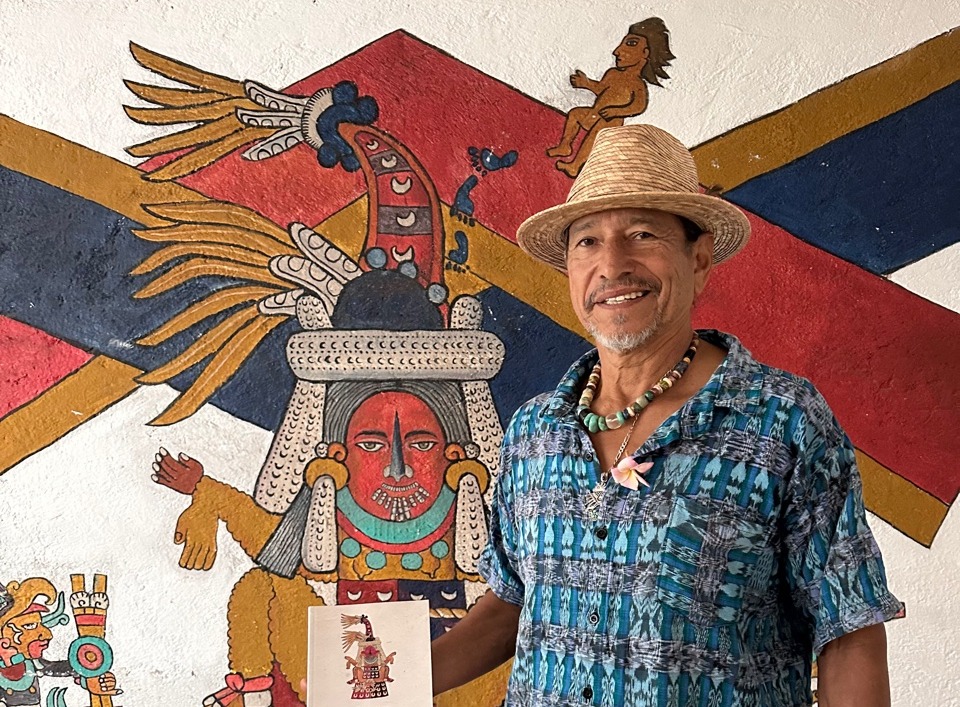
An interview with Kuauhtli Vasquez, guide to the ancient Mexican Nahuatl culture
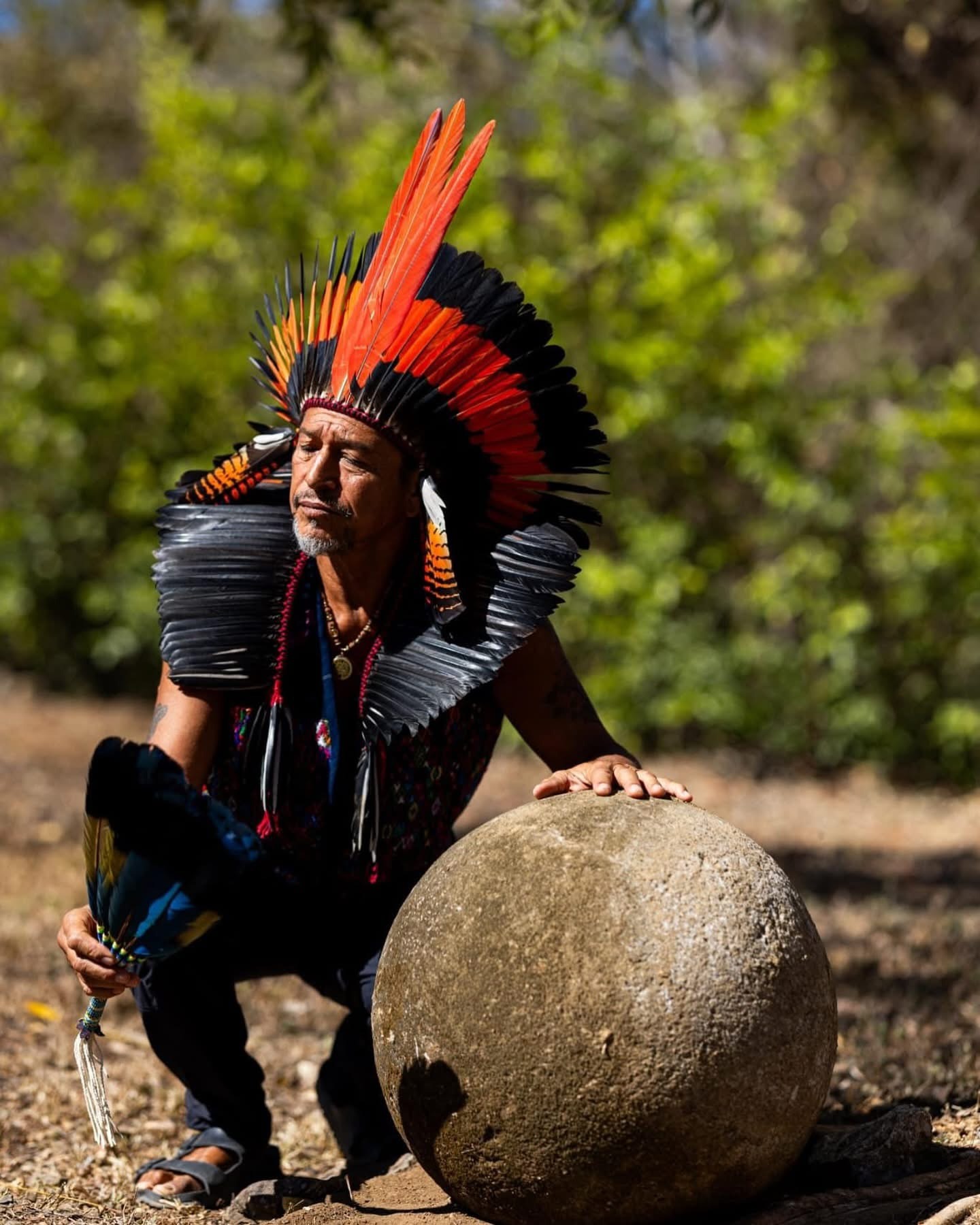
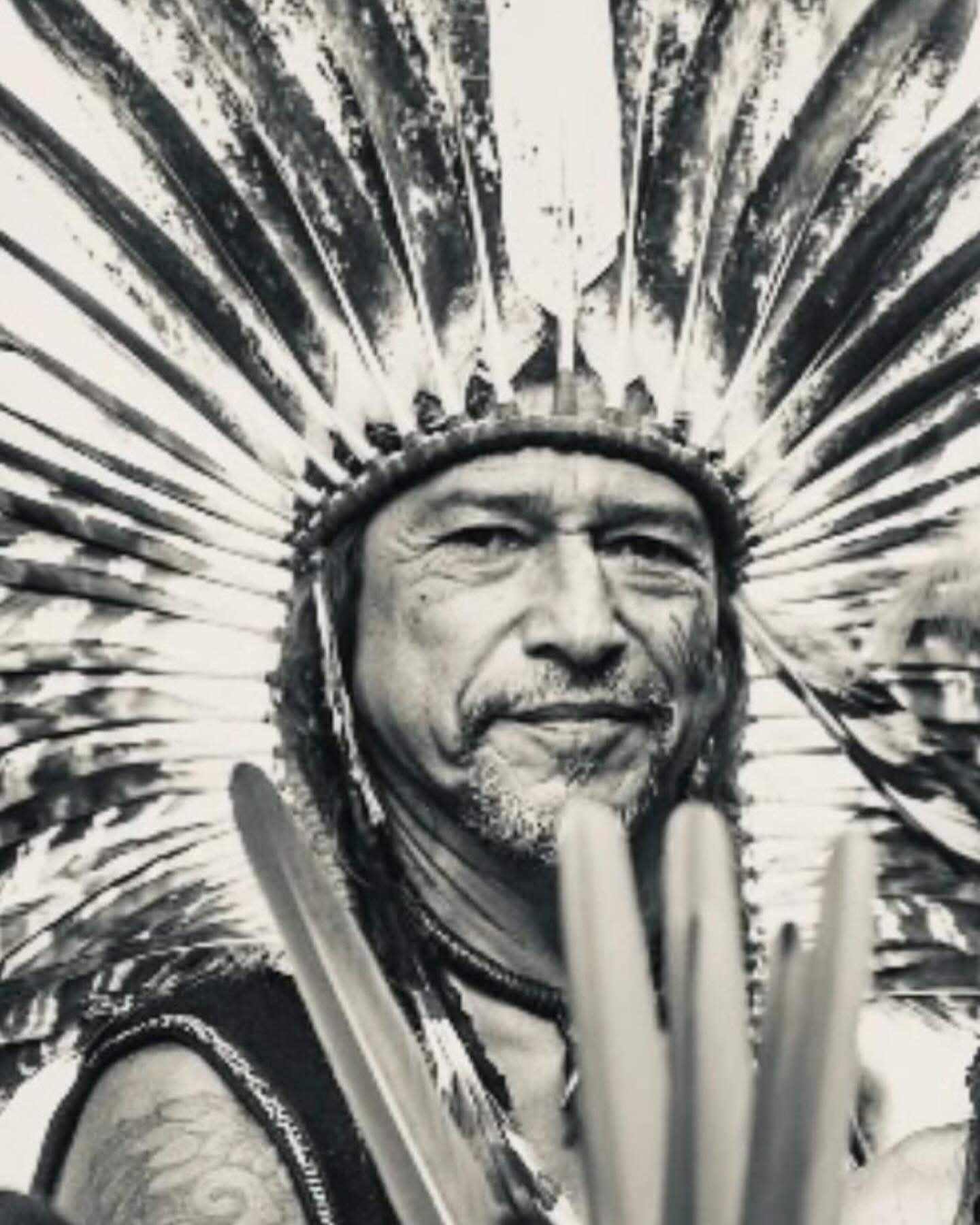
For more than three decades, Kuauhtli Vasquez has dedicated his life to preserving indigenous knowledge and sharing it across borders. A ceremonial leader, musician, and activist, he conducts Xochitl in Cuicatl (Flower and Song), danza (dance), and temazcal (sweat lodge) ceremonies—rituals practiced extensively by the Aztec and Mexica prior to the Spanish conquest. A Temaztiani, or master of sweatlodge ceremonies, Kuauhtli also holds the title of Spiritual Chief of the Teocali Quetzalcoatl, representing the Native American Church. His work often includes the use of peyote, a mescaline-producing cactus revered for its therapeutic and transformative powers.
His path has taken him to more than 40 countries, where he has led healing ceremonies, shared music, and spoken about the spiritual and medicinal importance of sacred plants.
As co-founder of the non-profit Xinachtli.co, Kuauhtli works to protect, nourish, and cultivate the ancestral gifts passed down through generations. Over the past 15 years, the organization has been at the forefront of peyote preservation through the Native American Church Teocali Quetzalcoatl, rescuing plants threatened by development, replanting them in safe ecosystems, and regenerating native habitats. Beyond Mexico, Xinachtli also supports Amazonian communities in safeguarding their lands and cultures.
At the heart of Kuauhtli’s work is the conviction that sacred plants are not only medicines but teachers—guides that help humanity remember its place within the web of life. His voice is both deeply personal and profoundly collective, carrying the weight of indigenous memory while speaking to today’s urgent struggles of disconnection, imbalance, and ecological crisis.
In Nahuatl, Kuauhtli means ‘eagle.’ In this conversation, he reflects on his roots, the meaning of peyote, the responsibilities of serving medicine, and the possibilities of healing and reconnection in a fragmented world.
To begin, I’d like to ask about your roots, since that is something we’ll return to often in this conversation. In our earlier talk, you mentioned that you were born in the United States, and that you reconnected with your roots only around the age of 20. Is that correct—when you first returned to your ancestral lands?
I was born in the United States. All four of my grandparents came from Mexico and Texas, and they moved north—almost up to Canada. People migrated there to work. When there was work in the north, like making automobiles in Michigan, they went to the factories. They also worked in the fields—planting, picking, and harvesting crops. That’s the kind of work people used to do.
My mother and father met while picking cherries in Michigan, and that’s where I was born. They decided to stay there. My grandparents on both sides also moved to Michigan, and that’s where a Mexican community formed. There was still a lot of culture alive in those communities: planting corn every year, holding dances, creating a cultural center where people gathered.
But what they didn’t do were the medicine ceremonies. They practiced other types of ceremonies, but not the medicine ones. Because they had been Christianized and colonized, those ceremonies had been outlawed. It wasn’t that people simply decided to stop—it was made illegal, so they were forced to stop.
When I was young, I was rebellious. I didn’t want to work in the factories making cars, so I decided to travel. I went to university, but got bored, so I left and started traveling. Eventually I decided to go to Mexico, because I knew a lot of the culture was still strong there. And it’s true—that’s where I found the cactus, the peyote, and the ceremonies. I liked it.
So I moved from Michigan to the Southwest, to Mexico. I stayed in Mexico for a year, and then I made contact with Native people in Texas, Arizona, and New Mexico. I moved to those states and began learning more about the culture. Arizona, especially, has many reservations. In Texas there were none. In Arizona, I learned from elders about sweat lodges, peyote ceremonies, traditional dancing, carrying the pipe, flower blessings—a lot of ceremonies.
Then I began asking my grandparents and uncles about our own Native roots, and they told me about our history. Because in the history books, you find almost nothing. Our people are barely mentioned. And if they are, it’s very limited. For example, the Mayan people had thousands of books. But when a bishop came to Yucatán, he ordered them all to be burned. For months they brought books and burned them, until the great libraries were gone.
The Mayan people had thousands of books. But when a bishop came to Yucatán, he ordered them all to be burned.
So people ask me, “Do you know about Mayan culture?” And I say, “A little bit—because I went to the Mayan Council, met the elders, and they explained things to me.” But people often ask, “Where are the books?” There are hardly any. Now it’s up to us to write things down.
And you have to be careful—because a lot of what you find on Wikipedia, on Google, on the internet, or in Hollywood movies is not correct.
But what did you learn about your own culture when you were meeting those elders?
Well, I learned that there was once a language spoken all the way from Central America up to Canada. This language is called Nahuatl—a very ancient language. The elders told me it came from Atlantis. For example, if you look at the word “Atlantis” in Nahuatl: atlantsi means “the sacred place surrounded by water.” So even the name Atlantis can be understood in that language.
Nahuatl was spoken by many nations, including those my grandparents belonged to. They told me that long ago, many peoples shared this language—the Hopi, the Wixárika (Huichol), the Zapotec, the Mixtec, the Chorotega, and even as far north as Canada, the Paiutes and the Shoshone. All of them were connected by Nahuatl. They also said there had once been a great confederation of nations, united by the sharing of knowledge. And that knowledge was always rooted in the earth.
They would say: Tonantzin — the earth is our mother. You cannot own the earth. You cannot sell the earth. You must care for the earth. All peoples felt the same. They developed food, and they said food is the beauty of the earth. Since food comes from the earth, you must share it with humans. Even in the language, the connection is clear. To say “human” you say tlakame—people of the earth. Food is tlaquali. The earth is tlali. All of it is related: the earth, the food, the humans. We’re all part of the same.
This helped me to understand things differently. When you grow up in the United States, raised Christian, you’re taught that only Christians understand God, only the United States is the best country. They separate you from everything else. The Native philosophy is inclusive: all people belong to the earth; the earth is the mother of all humans. This was completely different from what we were taught in school and church. When I discovered Native culture, it resonated—deep in my DNA, in my hereditary roots. And that’s the path I began to follow.
The Native philosophy is inclusive: all people belong to the earth; the earth is the mother of all humans.
This is why I wanted to learn more. So I started searching. I went to Mexico and began working with peyote. Then I went to Colombia and drank ayahuasca. In Ecuador I worked with San Pedro, and into the Amazon as well. I started traveling all around the world—though mostly across this continent at first—to learn about the culture.
I went to South Dakota to learn about the Sun Dance. Wherever I met people who were willing to share, I would follow. For many years I walked this path, learning the philosophies, traditions, and ceremonies of Native peoples.
I learned so much that eventually people began asking me to show them. In our culture we don’t say “shaman.” We say temasiani. A temasiani is someone who learns something and then shares it. In English you might call it a teacher, but it’s not exactly the same. Temasiani means sharing what you know.
In our culture we don’t say “shaman.” We say temasiani. A temasiani is someone who learns something and then shares it.
Does that mean that in your cultures there were never “pajes” or “shamans” as they’re sometimes called? Was it always more like teachers—people spreading knowledge?
They share the knowledge, yes. But there are also other categories of people who share in different ways. There are those who speak the latwani—those are the ones who carry the word. Then there are the ones who sing, who teach the songs, like the marakames. And there are others who guide the dances. So it’s not just one figure, not just a “shaman.” There are many roles, each with their own responsibilities and names.
Is the Nahuatl language still alive?
Yes, millions of people still speak it today.
Did you learn it yourself as well?
I learned to pray in the language, and I learned to sing in it. I know how to say simple things like “Good morning,” “How are you?” “Thank you,” and so on. But I haven’t been fully immersed in a community where I could really learn. I’m not fluent in the language—I wish I were. I can read it, and sometimes I can translate when people ask me to, but to truly learn it, I would need to live in a village for some time. I haven’t yet had that opportunity.
But you said that you traveled a lot, and you did San Pedro and also Ayahuasca. Through those ceremonies, your main idea was to connect more deeply with the culture, with your roots, and with the nature of this part of the world—somehow trying to find your place in this huge ecosystem.
Yes. Each nation has its own creation story—how the world was made, how people were made. And each has its own language. For example, Nahuatl is spoken a little differently in North America, in Central America, and in Mexico. It changes, but it’s still related. The same is true for the medicines: each culture, each plant, has its own particularities.
But I was always looking for the commonalities. What do the Lakota share with the Zapotec? Or the Aymara, the Inca, the Huni Kuin in the Amazon? What runs through all of them? And what I discovered is that there are deep similarities. Everywhere, people believe that the earth is our mother. The sun is our father—the light, the energy of life, comes from the sun, goes into the earth, and makes the food. The water is the same spirit in all of us. These things are universal.
And because of that, I could travel anywhere—to Europe, Africa, Asia, Latvia or wherever—and when people asked me, “What do you believe? Who do you pray to? How do you understand the world?” I could explain it simply: it’s the same everywhere. We are all human.
The differences come later, when people start creating systems of belief, programming themselves to see separation—different gods, different places, different appearances. That’s when the divisions start. But at the core, native peoples always understood: we all come from the same earth. We all drink the same water. We all eat food from the earth.
I think you thought a lot about what was the role of those sacred plants or sacred medicines in those cultures? Because each of them maybe have a different plant or plant combination, but all of them seem to hold a similar place in their traditions. What did you find out about those plants—and also about peyote? I read that peyote has at least 6,000 years of documented history with humanity.
Yes. The earth—the spirit—you could call it the consciousness of creation, however you understand it. God, the Creator, the Great Spirit—whatever name you give it. The elders, the Native people, understand that plants have special properties that help human beings see and understand life. They help us know our purpose, how to live in balance with the Earth, how to treat one another with love and respect.
This is what the medicines show: they awaken consciousness. They help you see how you’re connected to everything else. That’s why people say peyote increases perception—it lets you feel that everything is energy.
This is what the medicines show: they awaken consciousness. They help you see how you’re connected to everything else.
Today most people live surrounded by man-made things: concrete, glass, machines. We walk on sidewalks, buy food from stores, wear synthetic clothes. But just a couple of hundred years ago, people lived closer to nature. They made things from wood and stone, walked on the earth, wore clothes woven from plants. They understood how to fit into the natural order.
As humans developed a more mechanical mind, they lost that connection. And that’s why, historically, many of these plants were banned. Laws were written to prohibit people from using them—because the moment you ingest them, you begin to question: What kind of world am I living in? And then you go into nature and remember: This is the world I’m meant to live in. Birds, plants, waterfalls, the sun rising and setting. You sleep when it’s dark, wake when it’s light. That’s the natural rhythm—not spending your life in an office on a computer.
These plants are liberating. They lift your consciousness above the illusion created by modern systems. That kind of inner freedom isn’t something the system really wants. Yet now—even CEOs, even government leaders—are beginning to try them. They’ve created a paradox they don’t know how to escape. They’ve depleted the soil, polluted the water, built houses where rain no longer comes. It’s not sustainable. So now you see Silicon Valley people drinking ayahuasca. The World Economic Forum inviting Native elders. People waking up to the need for another way of thinking.
Now you see Silicon Valley people drinking ayahuasca. The World Economic Forum inviting Native elders. People waking up to the need for another way of thinking.
I believe Mother Earth designed these plants to help humans stay focused on a natural way of life—to step back from AI, from the screen, and return to touch the earth. Personally, I like to touch the earth. Some people look at me like I’m strange, but that’s where I pray: outside, hands on the ground, eyes on the sun and clouds. That’s how people used to pray—sitting on the earth.
The elders taught me: when you take tobacco, wet the corn husk, light the fire, breathe the air—you’re working with the four elements. You touch the earth, you pray to the sun. This is the natural energy that gives us life—the manifestation of the Creator, however you name it: Allah, Jehovah, God. If you want to know what it looks like, that’s what it looks like. That’s what it feels like.
Now, we often talk about Nixon and the war on drugs, but with peyote the story goes much deeper. It was actually the Catholic Church that first prohibited it, declaring peyote “an evil to be rooted out in the New World.” Its prohibition goes back centuries, and people were even killed for using it.
So there are people in Mexico that, when the Christians came and told them this, went high into the mountains where not even the horses could travel. The soldiers, the priests, they couldn’t go there. And they kept their culture intact—the same language, the same clothes, the same prayers, the same peyote. I learned with these people. These were the people I sought out. And the Christians don’t have a church there, the government doesn’t have an office there, and they eat peyote for their ceremonies.
These are the people that showed me, that shared their culture. They use feathers, they dance, they grow corn, they hunt deer, they pray like this—to the deer, to the corn, to the peyote. And they say their culture is many thousands of years old.
They said that they found some fires that were very old. And I think—there are different numbers, every time they carbon date. One of them was 20,000 years. And there were ceremonial fires. They also found petrified peyote at the site, in a cave that has drawings—art showing a half moon, and a man drawn with peyotes. This is how the Half-Moon Ceremony was designed, the crescent moon, from ancient artwork that explained the sacred sites, how to take offerings to the water, to the springs, to the oceans, to the volcanoes, to the mountains, to the places where the animals drink—all this. They keep their culture alive. It’s all about maintaining and protecting the ancient culture.
Because it’s true—the Christians, like I said, if you are used to praying outside, they wanted you to come inside a church to listen to what they were going to tell you. Why do I need to go inside a church? We pray out here in the desert. But no, they said, you need to come. And they realized that peyote liberates your mind. That’s why they made it illegal, they said it was part of the devil.
And when the native people were asking Congress to recognize their religion—you see, the Christians have a religion, the Muslims have a religion, the Jews have a religion, the Buddhists have a religion. The Native people also have a religion. But they don’t respect it. They don’t look at it as a religion, as a belief, as a way of life. So they made it illegal to believe in this way. It’s like when they used to persecute people who had a different religion. The same thing is happening to Native people right now.
They wanted to force us to be Christians. They took all the Native children and put them in Christian schools. They cut their hair, changed their names, and would slap them or beat them if they spoke their language. This is what happened. And this is why a lot of Native people don’t understand their culture, their roots. A couple of generations—it’s hard. For 200 years in the United States, they’ve been doing this. Now many Native people think they’re Americans. They pledge allegiance to the American flag, they make the sign of the cross, they pray to Jesus, they sing to Jesus—because they got brainwashed.
And when you eat the peyote, when you drink the ayahuasca, it clears everything. It resets, like wiping the slate clean. That’s what happened with me when I was in the desert and I ate the peyote. I saw like this—I was like, whoa. I saw everything different. I saw the sunrise different, I saw the plants different, I felt Mother Earth different. Everything changed for me.
I’ve given peyote to—I don’t know—maybe 10,000 or maybe 12,000 people all over the world. Forty countries I’ve been to. Take one, like Australia: I went to Perth, to Melbourne, to Byron Bay, to Cairns, to Sydney, to Gold Coast. Many places. Or England: London, Cornwall, Sussex, many places in the UK. So if you multiply it like that, there are many, many people. For the last 30–40 years I’ve been giving peyote all over, and every time people say they feel different about humanity, they feel different about themselves and how they relate to others.
And this is what peyote means: to illuminate your heart. In Nahuatl, “peyote” means “light of your heart,” like a glowing heart. And what it does is this: people are usually stuck in their program up here, in their head. When you eat the peyote, it opens your heart. Your heart becomes active, and you start feeling the other person’s heart. You might not even realize it, but it’s happening. Everybody in the circle starts feeling each other. They look at each other with the heart. And that’s why people say, “This is the first time I really felt part of the group.”
In Nahuatl, “peyote” means “light of your heart,” like a glowing heart.
In a way, if Ayahuasca is a Mother and it’s more introspective, peyote is somehow more connecting, if I understand correctly.
Peyote does have this effect, but it also develops self-awareness. When I first took peyote, I became aware of many things I had experienced in life, and it helped me to heal a lot of trauma from my childhood and teenage years. I could see beyond my personal story and understand more about what had happened in society—that I wasn’t just a personal victim, but part of a group of Native people who had suffered colonialism, military dominance, racism.
So I stopped taking it personally. I thought, no wonder I experienced all this. Before, I thought it was me, my fault. But I realized that living in the United States, you’re going to suffer in these ways: exploitation, discrimination, all of it. And that realization was very liberating for me.
I think for many people, whatever their personal experiences are, peyote helps them begin to unravel it and see things from a different perspective. That shift is very healing—it’s like a cure. In the United States, there are more hospital beds filled with mental health patients than any other kind, because mental problems often come from trauma, from damage to the spirit, and that manifests as distorted ways of thinking.
I think for many people, whatever their personal experiences are, peyote helps them begin to unravel it and see things from a different perspective. That shift is very healing—it’s like a cure.
Peyote can sometimes help people who are depressed, anxious, bipolar—people carrying deep psychological wounds. It helps with the cycle of abuse, both abusers and the abused. All of this is part of the system people are taught. And as an individual, it’s very difficult to heal on your own. Sometimes meditation or other practices help, but peyote is one of the ways people can resolve past trauma and arrive at a space where they feel good about themselves, where they learn to love themselves. And once you love yourself, you can love others.
So yes, peyote is connecting, but it is also introspective. Ayahuasca, I would say, is probably even more so. It allows you to analyze your internal thoughts and feelings. It’s like holding up a mirror—you see yourself for who you really are. It’s like a truth serum: you can’t hide behind the mask anymore. And this is good—very good—for people.
You’ve said that you’ve served peyote to almost 10,000 or 12,000 people—that’s a huge responsibility. When the renaissance of psychedelics began, many came to ceremonies out of curiosity, while others saw a business opportunity. Today there are many self-made “shamans” offering medicine without being indigenous or truly knowledgeable—sometimes only for money. So there’s also a dark side. Since these experiences can be life-changing, and set and setting are always essential, how do you see both sides—your mission to serve as many people as possible, and at the same time the responsibility to protect what happens around these substances?
Yeah, well, a couple of things you mention I can address. For example, the same thing happens with Christianity. All I have to do is put on a black shirt and a white collar and start preaching about Jesus—and people will probably pay me too, to bless them, marry them, whatever. Anybody can do it, and nobody will stop them. The same is true in the medicine world: there are always people like that.
But peyote itself is different—you can’t overdose on it. If you take a lot, you may have a spiritual awakening, and however you call it, you begin to see yourself in the light of truth. That’s going to be positive.
Whether or not your life changes drastically depends on how you interpret that awakening. If you’re a politician pushing racist laws, or trying to cut health services for poor people, and then you eat peyote, you might realize what you’re doing and want to quit your job. If you’re a doctor prescribing pharmaceuticals that don’t cure but only addict people, and then you drink Ayahuasca or eat peyote, you might decide you don’t want to practice that way anymore. If you’re a businessman paying people minimum wage while they ruin their eyesight sewing all day, and you realize you’re acting like a slave driver, you might want to change your life.
So the responsibility lies with each person. Everyone should understand that when they meet these medicines, their life could change drastically. You might become more loving, more human, less greedy. There are millionaires who take Ayahuasca or peyote and then start giving money away. Their wives say, Why are you giving money to that foundation? Now we only have 20 billion instead of 30! But these things happen—and it’s good. This is what the world needs: people changing their perspective about the purpose of life.
The purpose of life is not to accumulate wealth. The purpose of life is to enjoy life, to be loving, to care for the earth and for other human beings. That’s what the native people showed me. Even though I’m Native, I had forgotten—I was chasing a profession, a big house, a car, maybe even a jet. I had those aspirations because I was intelligent in school, got a scholarship, and was told: If you do well, you can become wealthy. For a while, I thought that was my purpose—until I had my own awakening.
Everyone should understand that when they meet these medicines, their life could change drastically.
And I realized: a lot of people never have this awakening. That’s why they suffer from mental and physical problems. But the plants helped me. Today, I’m healthy—I don’t have high cholesterol or blood pressure, I don’t take pharmaceuticals, I don’t wear glasses. I owe that to the plants, and also to simple practices: every morning I drink a glass of water before I check my phone, I give thanks, I touch the earth, and I say thank you for my life and health. I dance, I do Qigong and yoga. Health is happiness. If you live in pain and sickness, it’s hard to be happy. But if you’re healthy and have enough—that’s already a good life.
I think gratitude is one of the most powerful emotions, with a direct impact on our health. Science has confirmed this now, but indigenous communities have known it for millennia. And yet, for many Western people, it still feels difficult to integrate gratitude organically into daily life.
In our language we say tlazocamati, which basically means “I love you like the Earth.” That’s how we say thank you. I don’t really know what “thanks” means—danke, where does that come from? I’m not sure. In our culture, tlazocamati comes from the word love. Maybe it’s the same everywhere—maybe saying thank you is always, in some way, saying love.
Peyote, compared with ayahuasca, San Pedro, or mushrooms, is a plant that grows very slowly, and it should be approached with deep respect and care to ensure its survival. Because if literally everyone started using it regularly, it could go extinct.
Actually, there’s a lot of peyote. I’ll share something with you that most people don’t know. I’m here in Texas, and this is where the peyote eaten by Native people in the United States comes from. I know the people who harvest peyote and sell it to Native communities. One of them told me he has thousands and thousands of peyote buttons that nobody is eating. He cuts them and stores them, but many of the elders who used to buy them have passed away, and the younger generations aren’t continuing the traditions in the same way.
He said he had around 200,000 dried peyote buttons—meant to be used in ceremony—but they’re just sitting there. Why? Because one Native leader went on television and said, “There isn’t enough peyote. Stop eating peyote.” So people listened and stopped. But then this harvester showed me a video of the desert: he walked through and said, “Look, look—peyote, peyote everywhere!” He said, “I don’t know why they said there isn’t enough. There are millions still growing. The people should be eating peyote, not stopping.”
Why did he do that?
I don’t know. Maybe it was another ploy. Maybe they even paid him to say it, I can’t say for sure. But it’s true—people tell me the same thing. They say, “I don’t know if I should come to the peyote ceremony, because they said we’re not supposed to eat peyote.” And I ask, “Who said that?” And they answer, “Well, a native guy said it—I saw him on television.”
So I looked it up and saw who was saying it, and honestly, I don’t know. Everyone has their own way of understanding the situation. What I told people was, “Well, okay—then let’s all plant our own peyote.” But then they said, “No, you can’t, peyote is illegal to plant.”
So on one hand, they say there isn’t enough peyote, and on the other, they say you can’t grow it. Don’t eat peyote, don’t plant peyote… what do they really want you to do? To me, it just feels like part of the government’s control.
As far as I know, in the United States it is legal to use peyote ceremonially as a sacrament in the Native American Church. I believe it was President Clinton who signed this into law in 1994. There was even research conducted among members of the Native American Church showing that peyote users were, on average, more psychologically healthy than those who did not use it.
Yes. Well, actually, it started long before President Clinton. The Native American Church began around the turn of the 20th century, right around 1900, when Native people fought for—and demanded—their right to eat peyote.
What Clinton did was help to strengthen this right through the Religious Freedom Restoration Act. And what does that mean? It means that if Christians can invite someone to church and have them become Christian, then Native people also have the right to open their religion to others. So if you want to come into my church—into my tipi—and eat peyote, you can. You don’t have to be Native to believe, to participate, to eat peyote. You can become part of the Native American Church even if you’re not Native American.
That’s what religious freedom means: anyone, from anywhere, can choose to enter into that practice legally. It’s not limited only to Native people anymore.
You don’t have to be Native to believe, to participate, to eat peyote. You can become part of the Native American Church even if you’re not Native American.
How do you incorporate peyote into your everyday life? Because in your normal life—when you’re not leading ceremonies—is peyote still present?
I take a microdose. I eat a little bit every morning—maybe half a gram of peyote—with a glass of water.
But you do it to keep this connection with the source, in a way?
Absolutely. It helps me not to get angry when things happen. It helps me stay out of depression, especially when I hear all the bad news in the world. It keeps me positive. Physically, it also keeps my body healthy. The alkaloids in peyote prevent my body from becoming too acidic—and acidity is what causes cancer.
Peyote contains 52 unique alkaloids. They help keep the body alkaline, regulate hormones in the endocrine system, and restore balance to glands and chakras that have been damaged by spiritual or emotional trauma. A pharmaceutical might just give you synthetic serotonin if you’re lacking it. Peyote, on the other hand, helps the gland heal itself so your own body starts producing what it needs. It also helps generate stem cells—this is what chemists and doctors have told me.
I’ve been eating peyote for 50 years, and during that time I’ve seen its effects firsthand. I’ve helped people heal from heroin addiction and become leaders of ceremonies. I’ve helped people overcome alcoholism, cocaine addiction, and even childhood sexual abuse—and they’ve gone on to lead ceremonies themselves. Not only Native people, but women and men from other countries too. I’ve seen people suffering from depression or suicidal thoughts transform their lives through peyote.
This is why I’ve thought about making a documentary or writing a book—because nowadays the scientific community wants studies, letters after your name, credentials. But I could bring you people from all over the world to speak for themselves—about the health benefits, the psychological benefits, the life changes that come from not only attending a ceremony but also taking small amounts of peyote regularly, instead of pharmaceuticals.
I can give you an example of a man who went to India. He was a very spiritual person, and he went there to deepen his spirituality. While in India, he contracted a disease. At first, they thought it was typhoid, then malaria, then something else. They gave him different diagnoses, treated him for all kinds of illnesses, but nothing worked. He had fever, he was losing weight, his mind was deteriorating. Eventually, he returned to the United States, but even there, they couldn’t cure him.
I sent him 200 fresh peyote buttons. They put them in a blender, made a juice so it was easier to drink, and he consumed all 200. At the same time, people made a fire and prayed for him—asking the Creator Spirit to help. And he was healed.
I’ve seen this before—when so-called medicine from laboratories fails, but ayahuasca, San Pedro, mushrooms, and peyote prove themselves more curative. These plants have more healing ability than chemicals from a lab, because they are natural. They have a spirit. And you can connect with that spirit; it can see your spirit and then alter your physical being in a healing way. That’s why addictions are broken, depression is lifted, healing comes.
Of course, the pharmaceutical industry is incredibly profitable. Insurance companies, too, are tied into this system. They don’t want to lose profits, even if it means blocking people from true healing. So yes, I’m sure they’re lobbying and not thrilled about me saying that peyote can cure things their medicines cannot. But it’s the truth.
Some pharmaceutical companies now want to extract and sell alkaloids like mescaline. But peyote isn’t just mescaline. It isn’t just alkaloids or molecules—it’s the spirit and the tradition. That’s why I don’t tell people to just run out and eat peyote. Peyote is a way of life. It’s not something you do on a weekend.
Some pharmaceutical companies now want to extract and sell alkaloids like mescaline. But peyote isn’t just mescaline. It isn’t just alkaloids or molecules—it’s the spirit and the tradition.
Those who really understand it change their lives to make space for this spiritual helper. It helps reorganize your priorities. You might still have the same job, the same responsibilities, but you see them differently. You smile more, laugh more, and enjoy life more. That’s what I tell people: peyote will help you enjoy your life more.
What is the spirit of peyote?
The spirit of peyote has a history. It is said that the spirit first transformed from pure essence into a human form. It manifested as a fetus in the ocean and asked some women to bring him out of the water. They raised him as a little boy and taught him what it meant to grow up as a human. He wanted to have this experience so he could understand humanity.
When it was time for him to mature, instead of becoming just a regular man, being a powerful spirit he transformed into other beings—first into a deer, then into an eagle. He could manifest in different forms, and for thousands of years he traveled around as the blue deer, as the eagle, helping people, guiding them.
At one point, he wanted to become more accessible to humanity. So he asked the native people to hunt him as a deer. They went into the desert, saw him, and he told them: Shoot me. When they did, instead of finding the deer, they found the peyote cactus with an arrow stuck in it. They were astonished: We shot the blue deer—and it became all these cactuses.
Then he spoke to them: Pick this cactus. Eat it. And when they did, they saw the deer again, then the eagle. He told them: I am the same spirit—the eagle, the deer, the peyote. Now I can help you. I can heal you. I can show you things.
This is how the native people developed their relationship with peyote, how they came to call him Kauyumari*—the name we use when we speak to the spirit of peyote. This history is something many people today don’t realize: there has always been communication between the spirit of peyote and the spirit of the people.
And this communication isn’t limited to peyote. The earth also speaks. The sun communicates. The trees, the birds, the animals, the waters—all communicate. Some call it vibration. Many people today think communication only happens through thoughts or words, because they live too much in the mind. But true communication happens on an energetic, vibrational level—something you can feel with your heart, your hands, even your small intestines.
When you move into this realm, many things become possible. You can understand how the pyramids were built. You can understand how the plants revealed themselves to make ayahuasca, or how, out of thousands of mushrooms, the healing ones made themselves known to the people.
This kind of communication is like family: the mother speaking to the children, the children to the father, the pets to the family, the plants to the humans. Everything is in dialogue.
Humans all vibrate at a similar frequency—that’s why you can understand me right now. But beyond words, I can also send you love, and you can feel it. Because I love everyone. I have no enemies, no animosity toward any human being. I love all of creation. This is what the earth taught me. This is what the plants showed me.
But how far are you yourself ready to go in this communication? Are there levels you do not want to touch, because it’s endless?
It’s infinite. There’s really no beginning and no end. It’s a mystery—for the mind, for the small mind of a human being it’s hard to comprehend this mystery of no beginning, no end. Of the endless, the forever, the always…
So people create their own understandings. For example, we believe everything is in cycles. The earth is not really just going around the sun the way they show children in school. They show a little picture of the earth looping around the sun. But in reality, the earth is spiraling through space. The sun is also spiraling. The galaxy is spiraling. Everything is moving in waves, in spirals—not in flat little circles.
Once you understand how the earth actually functions, this is what the Mayans already understood. The Mayans understood the spiral existence, the hunab’ku. The native people understood this. Today, science often tries to limit your mental capacity to understand the infinite realms of existence. The medicines want to expand your consciousness so you begin to perceive the infinite mystery of the universe.
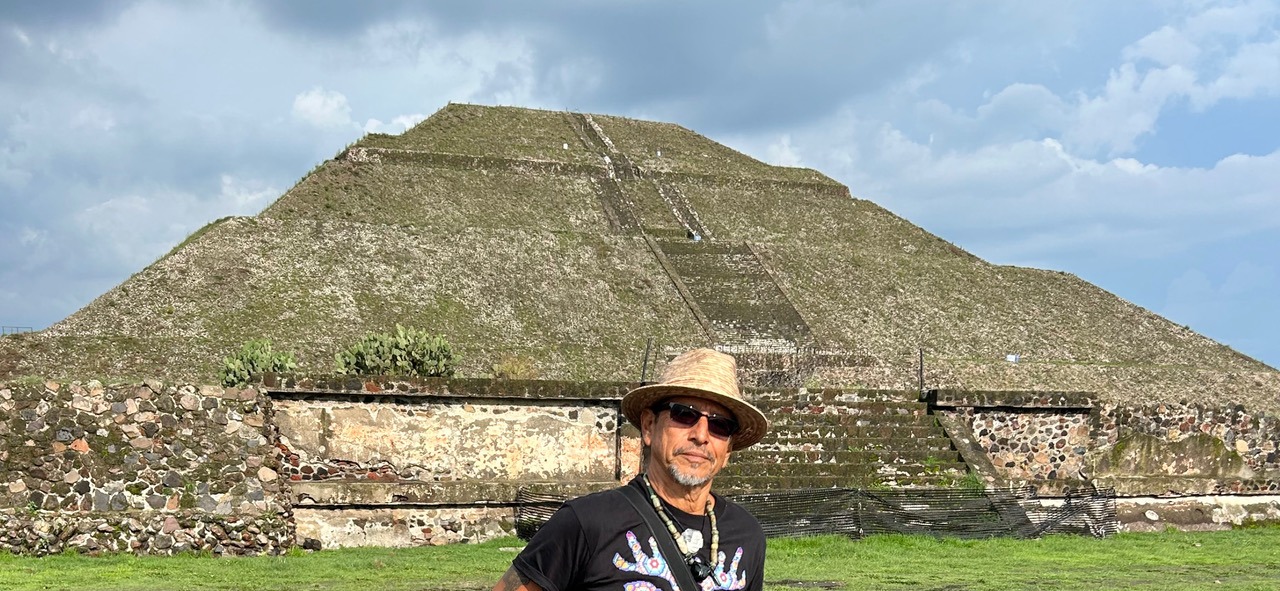
That’s how they were able to build the pyramids, to move stones that weigh 40 tons and fit them so precisely you can’t even slip a hair between them. This is how they produced so much food, how they created art. Creativity itself comes from catching a glimpse of the infinite universe and then manifesting it in human experience.
Creativity itself comes from catching a glimpse of the infinite universe and then manifesting it in human experience.
This is why art has always been with humans since the beginning. If we look back, art has always been there—in cave paintings, in music, in sound. Art was always present.
No, those came afterward. The first creations were the pyramids. The further back you go in history, the more astonishing the creations are. The oldest pyramids are the most complex. The oldest art is the most scientific. The further you go back, the more advanced the construction, the more incredible the technology.
I remember once when I went to Egypt, they told me that the pyramids were made with a little hammer and chisel. They even showed me a picture of a man chiseling a stone and said, “You see, this explains how the pyramids were built.” I didn’t argue with them—because if someone truly believes that, I know I can’t convince them otherwise.
But when I think about it, even as a child I had different ideas. I remember taking a magnifying glass and using the sun to burn wood or paper. And I thought, If I could make a magnifying glass big enough, I could probably cut stone. Later I realized: there are huge crystals in the world. Imagine shaping one and using it with the sun—you could create something like a laser to cut rock.
But no, they don’t want you to think like this. Why? Because it goes outside the narrative they want you to accept. They want you to believe that prehistoric humans lived in caves drawing pictures, starting from something primitive. But from what I’ve seen, this isn’t true. Every time I visit ancient sites—whether in Peru, Mexico, India, Indonesia, Turkey, England, or Greece—the older the site, the more technologically advanced it is.
And that, too, is art. Art is humans transforming natural elements into manifestations that reflect the infinite mystery of the universe. Whether it’s a bird, a flower, an apple, the ocean, or the stars, they transformed what they perceived into form—through sculpture, song, painting, or dance.
Art is humans transforming natural elements into manifestations that reflect the infinite mystery of the universe.
For example, in our culture there’s the Corn Dance. And when you count the steps in the dance, the total equals the number of days it takes for corn to gestate. That’s art too—an embodiment of knowledge, nature, and the cosmos, all woven together.
But that’s the moment—if everything in the universe moves in cycles, then as a civilization we are now in a certain part of that cycle. We haven’t managed to create anything like the ancient pyramids, and from the architecture being built today, perhaps nothing will remain. How do you see the destiny of our civilization? I remember being in Peru in 2005, and there people spoke a lot about the Pachacuti age we had entered. There are many prophecies, of course, but what we can see in real life are more and more natural disasters—many of them caused by us—and wars. It feels like we are standing on a threshold. The question is: can we cross it and survive, or is collapse our destiny?
No. You see, the medicines gave me this mantra: impeccable positivity. So you’re speaking with someone who practices impeccable positivity. And if you ask me that question, you already know my answer.
I think one of the main ideas is that peace is profitable. Many people tell me that war happens because of money—because of resources. But all of this can be achieved without violence. Resources can be shared; everything can be traded. Native peoples had extensive trade routes throughout the hemisphere, and whatever was considered precious or valuable could be exchanged peacefully.
Another focus, I believe, is bringing technology back into the natural order. Artificial intelligence, electricity, machines—all of it can be developed and used without creating pollution or destruction, if we place it within a framework of balance. These are fundamental principles that can help a civilization transcend its current crisis: using what we’ve already accomplished, but transforming it into a more peaceful, ecological way of living.
It’s about moving beyond fear, beyond illness, beyond being dominated or destroyed by the very machines we have created. Once we begin to share this vision—and once people truly start to live it—the sacred plants will stand as fundamental allies, helping us shift our consciousness and remember another way of thinking.
But what do you see as your main mission for the coming years?
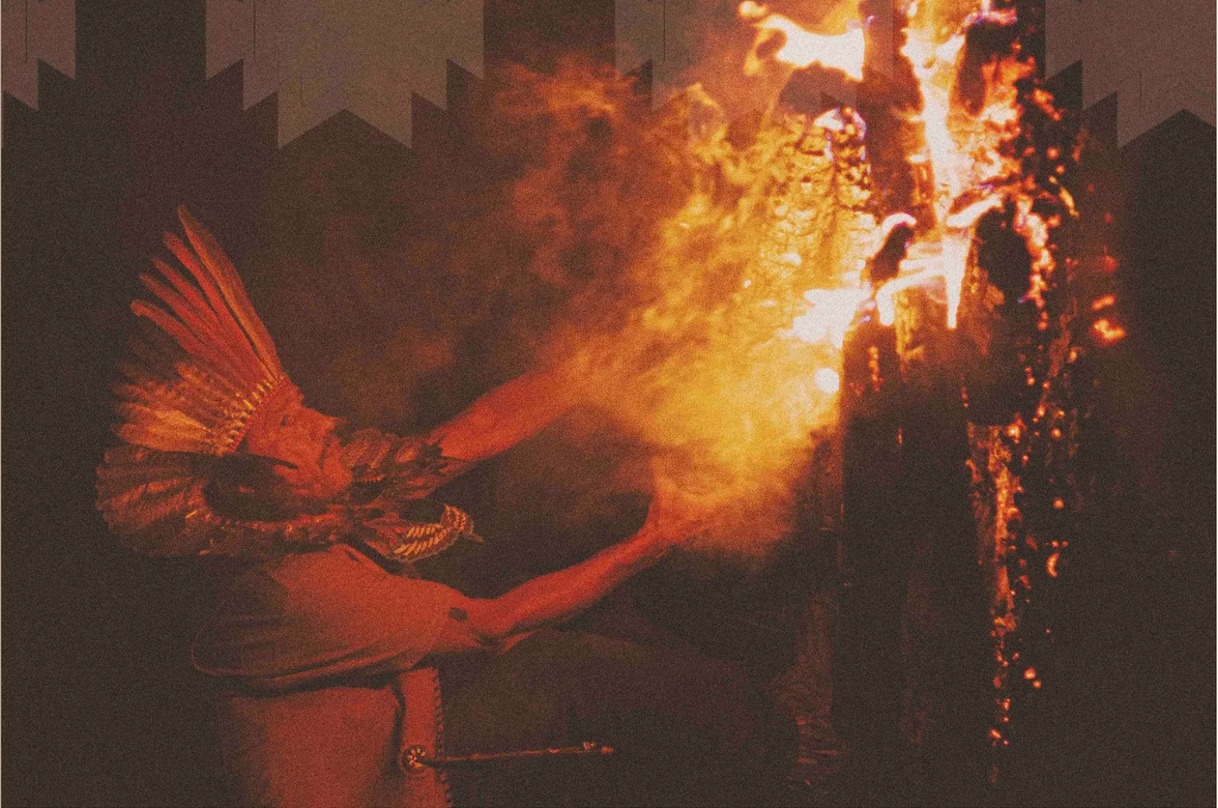
To serve peyote to as many people as I can, in as many places as I can. Next month I’m going to Europe to do ceremonies there—hopefully in new places, with new people, with the help of some of my friends. That’s what I’m doing: opening new fireplaces. We call them fireplaces, because we build a fire and serve peyote there.
So that people can reconnect—with the fire, with the Earth, with the water, with the wind, with the elements. This is the first step, the most important one: bringing humans back into connection with the elements.
What is ceremony? How would you characterize it in a wider context?
Humans are disconnected from nature—that’s the fundamental problem in the world. And humans are also disconnected from each other—that’s the second fundamental problem. This is why we destroy the Earth. This is why we kill each other.
So the remedies are simple. Remedy number one: reconnect humans to the Earth. Remedy number two: teach people how to love each other again. We already knew how, but we’ve forgotten. We just need to remember.
Remedy number one: reconnect humans to the Earth. Remedy number two: teach people how to love each other again. We already knew how, but we’ve forgotten. We just need to remember.
It’s not hard to say, I love everyone. It’s not even hard to feel it. It’s not hard to go outside, touch the Earth, drink water, and feel the love of the Earth—the energy of the water surging into your veins. There’s nothing complicated about it.
But people resist. And the medicine brings down that resistance. The plants bring it down in a natural way. That’s why the Earth made them: so humans can do two things again—love the Earth, and love each other.
*Kauyumari — also known as the Blue Deer — is a sacred figure in Wixárika (Huichol) cosmology. Considered a divine messenger, trickster, and teacher, Kauyumari is believed to have first led the people to peyote and taught them the accompanying rituals. He embodies guidance, music, and storytelling, serving as a bridge between humans and the spiritual world. - ed.
